The Digital Workforce Is No Longer Science Fiction
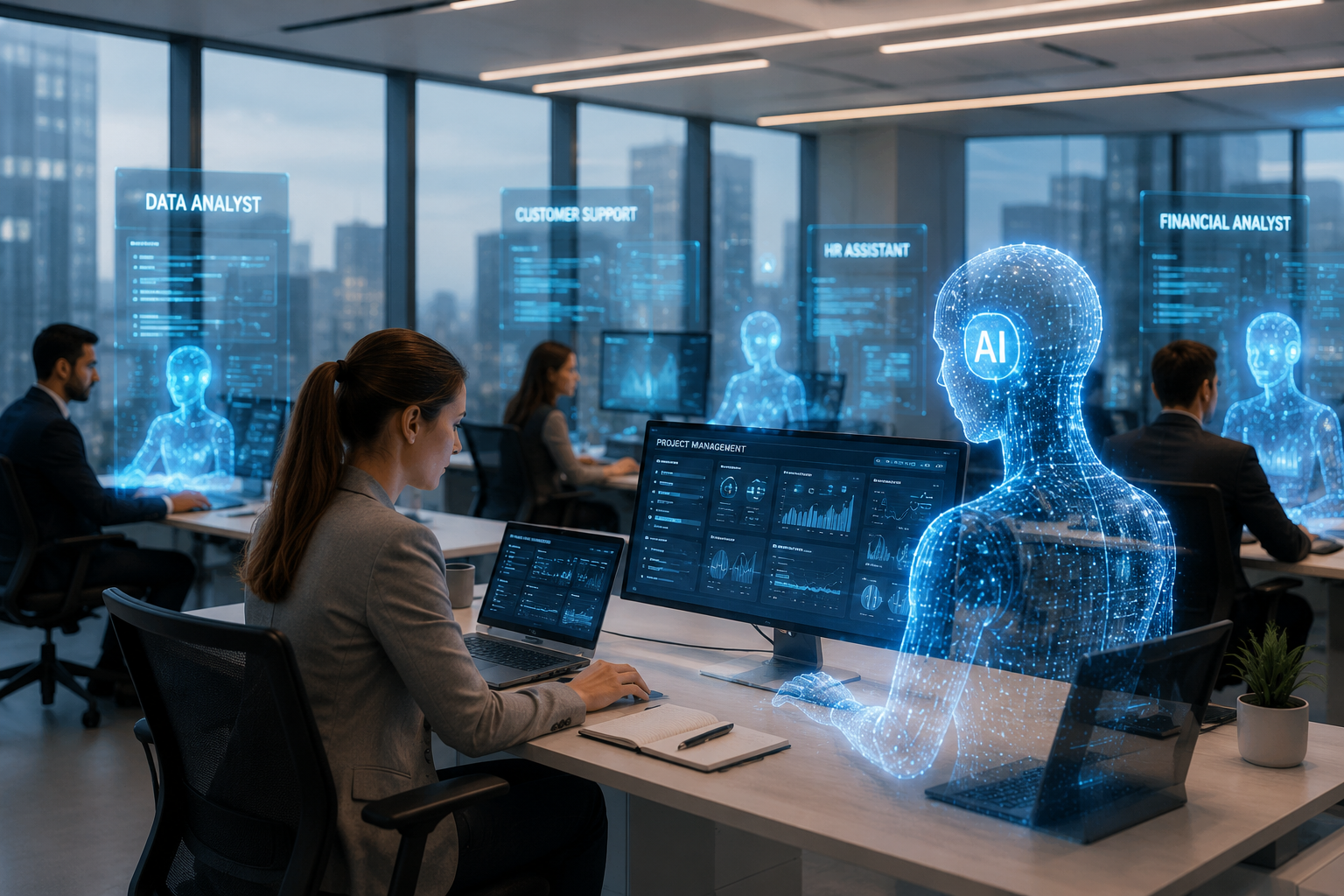
The digital workforce is rapidly becoming a reality across modern enterprises. What was once considered science fiction is now being deployed in customer service departments, IT operations teams, software development organizations, human resources departments, and financial institutions worldwide. Powered by artificial intelligence, these digital workers can perform complex tasks, analyze information, make decisions, and interact with business systems with minimal human intervention.
Unlike traditional automation tools that follow predefined rules, AI-powered digital workforce platforms are capable of adapting to changing circumstances, learning from data, and responding to new situations. As organizations continue to face talent shortages, rising operational costs, and increasing competitive pressure, many are turning to AI employees as a way to improve efficiency and scale operations.
What Defines a Digital Workforce?
A digital workforce consists of intelligent software agents designed to perform work traditionally completed by human employees. These AI employees can access enterprise systems, analyze business data, communicate with customers, generate reports, and automate workflows across multiple departments.
Modern AI agents differ significantly from earlier generations of robotic process automation. Rather than simply executing repetitive tasks, today’s AI employees can understand context, interpret natural language, collaborate with other systems, and make recommendations based on real-time information.
As large language models and agentic AI technologies continue to advance, organizations are beginning to deploy digital workers capable of handling increasingly sophisticated responsibilities.
Where AI Employees Are Already Creating Value
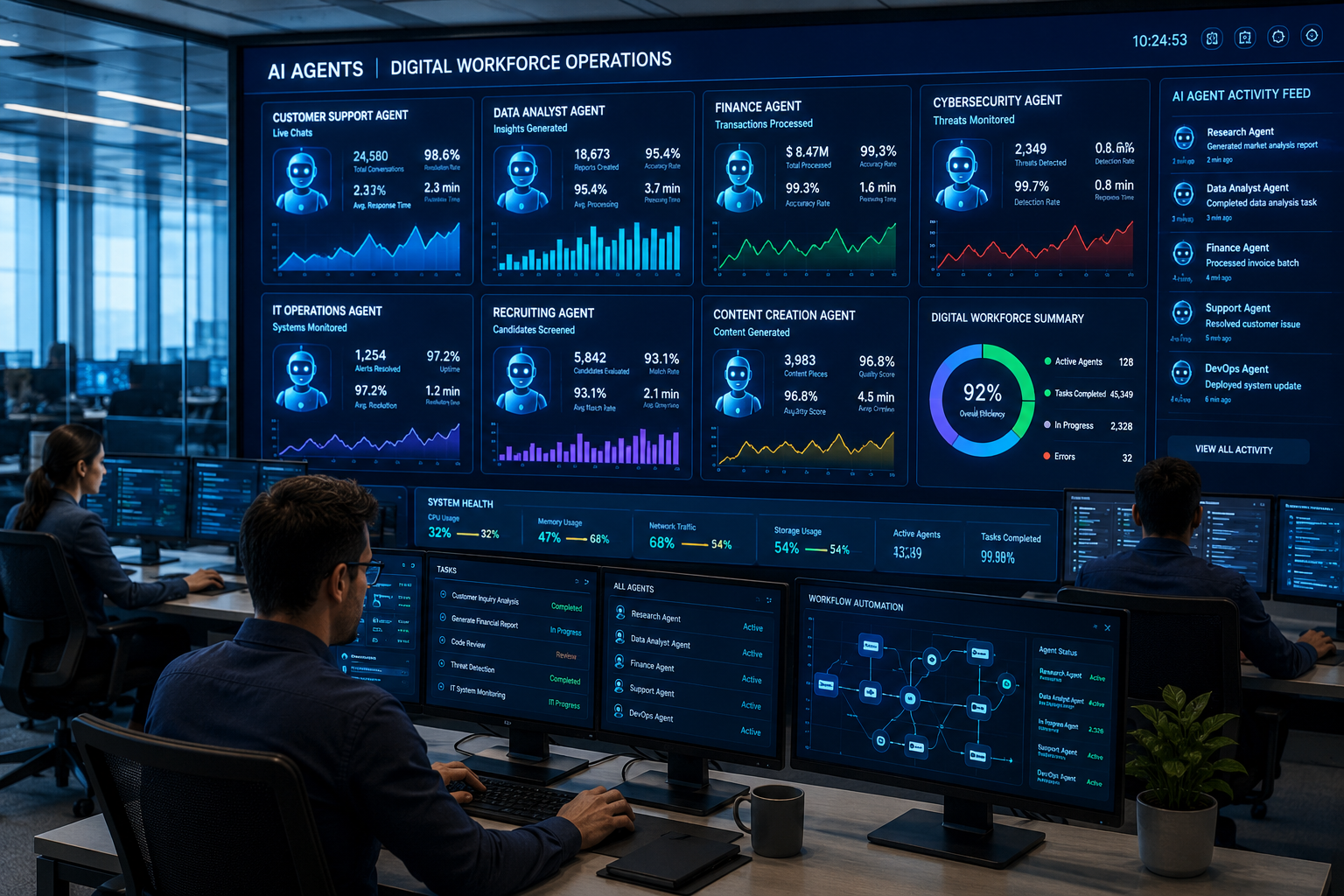
Many enterprises are already seeing measurable benefits from deploying AI employees in specific business functions. Customer service remains one of the most common use cases, with AI agents handling routine inquiries, resolving common issues, and providing around-the-clock support.
Within IT departments, AI employees assist with incident management, infrastructure monitoring, system diagnostics, and operational automation. Software development teams are using AI to generate code, review applications, identify vulnerabilities, and accelerate development cycles.
Human resources departments are leveraging AI employees to assist with recruiting, onboarding, policy management, and employee support. Finance teams are automating reporting, invoice processing, expense management, and compliance monitoring through intelligent automation platforms.
The result is a workforce that combines human expertise with machine efficiency, allowing organizations to complete more work without significantly increasing staffing levels.
Why Enterprises Are Investing in AI Employees
The business case for a digital workforce continues to strengthen as AI technology matures. Organizations are increasingly seeking ways to reduce operational costs while improving productivity and service quality. AI employees offer the ability to work continuously without breaks, process large amounts of information quickly, and perform repetitive tasks with consistent accuracy.
Many enterprises also view digital workers as a solution to ongoing labor shortages and skills gaps. As experienced professionals become more difficult to recruit and retain, AI employees can help organizations maintain operational continuity while human workers focus on higher-value activities.
Scalability is another significant advantage. Businesses can rapidly deploy additional AI employees during periods of increased demand without the challenges associated with hiring, training, and onboarding traditional staff.
The Security and Governance Challenges Ahead
Despite their potential benefits, AI employees introduce new challenges that organizations must address. Security remains a primary concern, particularly when digital workers have access to sensitive systems, customer information, and critical business processes.
Governance frameworks are becoming increasingly important as enterprises seek to establish accountability for AI-driven decisions. Organizations must ensure that AI employees operate within defined policies, maintain compliance with regulations, and provide sufficient transparency into their actions.
There are also concerns surrounding data privacy, bias, reliability, and the potential consequences of incorrect AI-generated decisions. Effective oversight and human supervision remain essential components of any successful digital workforce strategy.
Human Workers and AI Employees Will Work Together
While concerns about job displacement continue to generate headlines, many experts believe the future of work will be defined by collaboration between humans and AI employees rather than complete replacement. AI systems excel at processing information, automating routine tasks, and identifying patterns, while humans provide creativity, judgment, emotional intelligence, and strategic decision-making.
The most successful organizations are likely to be those that create environments where human employees and digital workers complement each other’s strengths. This hybrid workforce model has the potential to increase productivity while allowing employees to focus on innovation, problem-solving, and customer relationships.
Preparing for the Future of the Digital Workforce
The digital workforce is expected to become a standard component of enterprise operations over the next decade. As AI capabilities continue to improve, organizations will increasingly redesign workflows, business processes, and operating models around intelligent automation.
Leaders must begin preparing now by developing governance frameworks, investing in workforce training, strengthening cybersecurity controls, and identifying opportunities where AI employees can deliver measurable value. Those that successfully integrate digital workers into their operations may gain significant advantages in efficiency, scalability, and innovation.
Conclusion
The rise of the digital workforce represents one of the most significant transformations in the history of modern business. AI employees are already changing how enterprises operate, automate processes, and deliver services. While challenges surrounding governance, security, and workforce adaptation remain, the momentum behind intelligent automation continues to accelerate.
For enterprises navigating the next phase of digital transformation, the question is no longer whether AI employees will become part of the workforce. The real question is how quickly organizations can adapt to a future where humans and intelligent digital workers operate side by side.
Related Articles
- The Agentic Web: AI Agents Are Becoming Internet Users
- AI Agents Are Replacing SaaS
- The Future of Agentic Software Delivery: Unifying Source & Binaries
- AI Accountability Crisis: Who Takes Responsibility When AI Gets It Wrong?
- AI in DevOps: An Enterprise Reality Check
- People vs Technology: Why Human Talent Will Always Win