

The AI Privacy Crisis: How Much Does AI Know About You?
Artificial intelligence has become one of the most powerful technologies shaping modern life. From personalized recommendations and digital assistants to AI-powered search engines and smart devices, artificial intelligence now influences how people communicate, shop, work, and consume information. While these technologies offer significant convenience, they also raise an increasingly important question: How much does AI actually know about you?
The AI Privacy Crisis is emerging as one of the most significant technology concerns of 2026. Every day, AI systems collect, analyze, and process enormous amounts of personal information. Search history, location data, purchasing habits, social media activity, voice recordings, and online behavior all contribute to detailed digital profiles that help AI systems understand individual users with remarkable accuracy.
For consumers, this creates a difficult balance between convenience and privacy. While AI-powered services can provide personalized experiences and improved recommendations, many people remain unaware of how much information is being collected and how it is being used behind the scenes.
The rapid growth of artificial intelligence is forcing businesses, governments, and consumers to rethink the future of digital privacy in an increasingly connected world.
The Rise of the AI Privacy Crisis
Privacy concerns are not new. For years, technology companies have collected data to improve products, personalize advertising, and better understand consumer behavior. However, artificial intelligence has dramatically increased the value of that information.
Unlike traditional software systems, AI can identify patterns across massive datasets and generate insights that were previously impossible to discover. Modern AI platforms can analyze user behavior, predict future interests, and personalize experiences with extraordinary precision.
According to research from McKinsey, organizations are accelerating AI adoption across nearly every industry, creating new opportunities for innovation while simultaneously expanding concerns surrounding data privacy and security.
As AI becomes more integrated into everyday life, the amount of personal information being collected continues to grow.
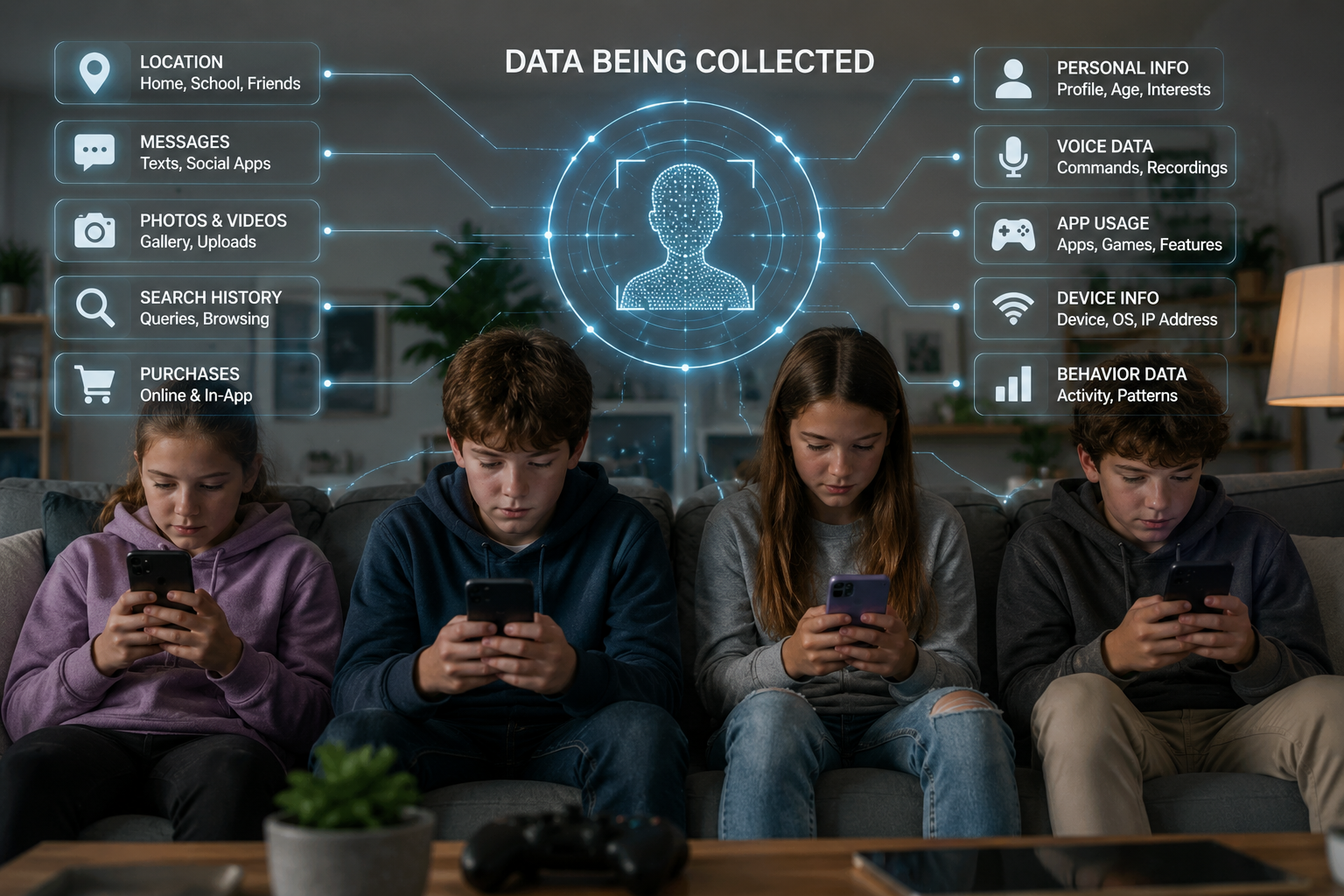
What Data Is AI Collecting?
Many consumers are surprised to learn how much information modern digital platforms gather. Artificial intelligence systems rely on data to improve accuracy and deliver personalized experiences.
Common data sources include:
- Search history and browsing behavior
- Location and GPS information
- Online purchases and shopping habits
- Social media interactions
- Video viewing preferences
- Voice assistant recordings
- Smartphone app usage
- Email engagement patterns
- Device information and operating systems
- Online advertising interactions
While much of this information may seem harmless individually, AI systems can combine multiple data points to create highly detailed profiles of individual users.
How AI Learns About You
The power of artificial intelligence comes from its ability to identify relationships between data points. Every online interaction contributes to a larger picture of personal preferences, behaviors, and interests.
For example, a person who frequently searches for travel destinations, watches airline reviews, and visits hotel websites may be identified as a likely traveler. AI systems can use this information to recommend products, display advertisements, and personalize content.
As AI models become more sophisticated, they can often infer information that users never directly provide. This ability to predict preferences and behaviors is one reason why the AI Privacy Crisis has become a growing concern among privacy advocates and regulators.
The Personalization Trade-Off
Consumers benefit from many AI-powered services every day. Streaming platforms recommend movies, shopping sites suggest products, navigation apps optimize travel routes, and digital assistants answer questions instantly.
These conveniences exist because AI systems learn from user behavior.
The challenge is that personalization often requires data collection. The more information AI systems gather, the more accurate their recommendations become. This creates a trade-off between convenience and privacy that many consumers rarely consider.
According to The World Economic Forum, digital technologies are increasingly shaping both consumer experiences and workforce operations, making responsible data management more important than ever.
Why Businesses Want More Data
Data has become one of the most valuable assets in the digital economy. Organizations use AI-driven insights to improve customer experiences, optimize operations, detect fraud, and develop new products.
Businesses collect data for several reasons:
- Improving customer recommendations
- Personalizing marketing campaigns
- Enhancing product development
- Reducing fraud and cybercrime
- Understanding consumer trends
- Improving customer support experiences
For many organizations, AI provides a competitive advantage because it enables faster and more informed decision-making.
The Risks Consumers Face
While AI delivers numerous benefits, privacy concerns continue to grow.
- Identity theft
- Data breaches
- Deepfake impersonation
- Behavioral profiling
- Targeted misinformation
- Unauthorized data sharing
- Loss of personal privacy
Cybercriminals are increasingly using AI to create more convincing scams, phishing attacks, and fraudulent communications. As artificial intelligence becomes more capable, the sophistication of these threats is expected to increase.
What Governments Are Doing
Governments around the world are responding to growing privacy concerns by introducing new regulations designed to improve transparency and accountability.
Regulators are focusing on:
- Data collection transparency
- Consumer consent requirements
- AI accountability standards
- Data retention policies
- Privacy rights protections
The challenge for policymakers is balancing innovation with consumer protection while ensuring organizations can continue developing beneficial AI technologies.
How You Can Protect Yourself
Although consumers cannot completely avoid data collection, they can take steps to improve privacy:
- Review privacy settings regularly
- Limit unnecessary app permissions
- Use multi-factor authentication
- Be cautious with personal information
- Monitor account activity
- Use reputable services and platforms
- Stay informed about emerging threats
The Future of Privacy in an AI World
The AI Privacy Crisis will likely become one of the defining technology issues of the next decade. Artificial intelligence will continue delivering remarkable benefits, but it will also force society to reconsider how personal information is collected, stored, and used.
Consumers, businesses, and governments all have a role to play in creating a future where innovation and privacy can coexist. Organizations that prioritize transparency and responsible AI practices will be better positioned to earn trust in an increasingly data-driven world.
Conclusion
The AI Privacy Crisis is not simply about technology—it is about trust. As artificial intelligence becomes more deeply embedded in everyday life, consumers must understand how their data is collected and used. The future of AI will depend not only on technological innovation but also on the ability of businesses and governments to protect privacy while delivering the benefits that AI makes possible.
Related Articles
- AI Accountability: Who’s Responsible When AI Fails in 2026?
- The Agentic Web: AI Agents Are Becoming Internet Users
- AI Browser Wars: Colton Reed Reveals the Future of Search
- AI Agents Are Replacing SaaS
- People vs Technology: Why Human Talent Will Always Win