
AI and the World Cup: The Technology Changing Soccer Forever
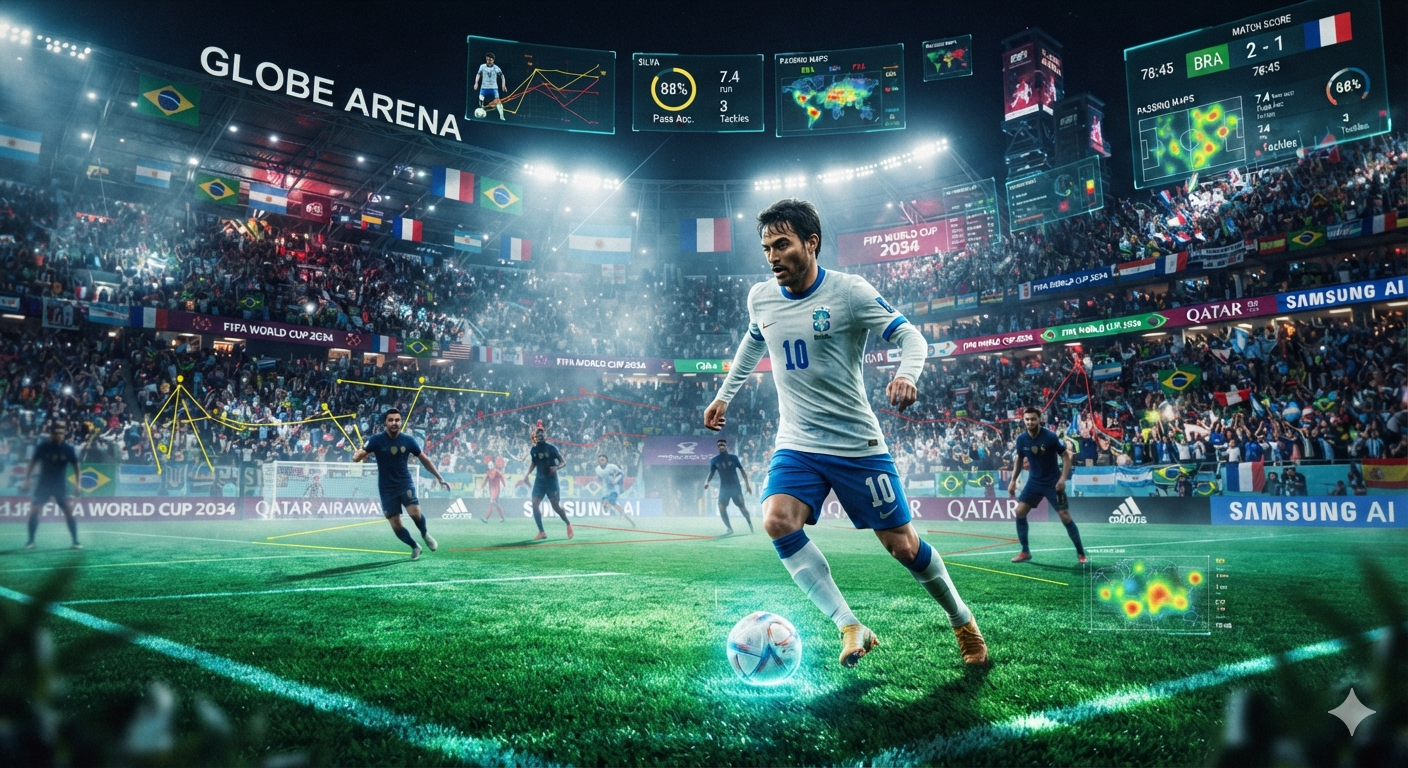
Every four years, the FIFA World Cup captures the attention of billions of fans across the globe. While incredible goals, dramatic upsets, and unforgettable moments remain at the heart of the tournament, another force is quietly transforming the game behind the scenes. AI and the World Cup have become increasingly connected, with artificial intelligence reshaping everything from player performance and coaching strategies to officiating, broadcasting, and fan engagement.
What was once a sport driven primarily by instinct and experience is now powered by data, machine learning, and predictive analytics. Teams, coaches, broadcasters, and tournament organizers are embracing AI to gain a competitive edge while delivering a better experience for players and fans alike.
AI and the World Cup: A New Era of Soccer
Artificial intelligence is no longer an experimental technology in professional sports. At the World Cup, AI systems process millions of data points during every match, tracking player movements, ball speed, positioning, passing accuracy, defensive formations, and countless other variables in real time.
Using computer vision, wearable sensors during training, and advanced analytics platforms, coaches gain insights that would have been impossible to discover just a few years ago. Instead of relying solely on video review, they receive detailed reports highlighting strengths, weaknesses, and tactical opportunities before, during, and after every match.
Smarter Coaching Through AI
Modern coaching has become increasingly data-driven.
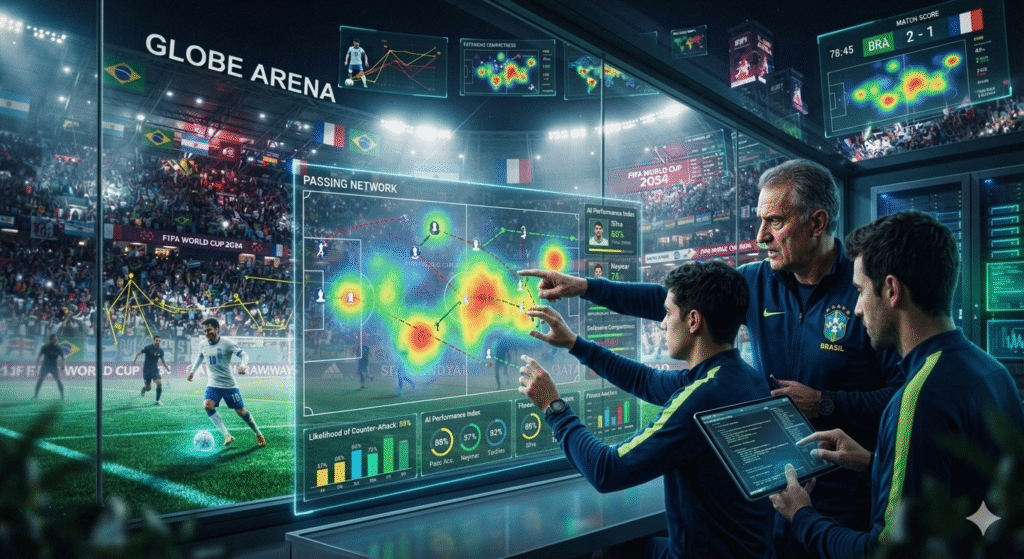
AI can analyze thousands of hours of match footage to identify patterns that human analysts might overlook. Coaches can study an opponent’s preferred attacking routes, defensive vulnerabilities, pressing tendencies, and substitution patterns before stepping onto the field.
During matches, AI-powered analytics help coaching staffs make informed decisions about formations, substitutions, and tactical adjustments based on live data instead of intuition alone.
Rather than replacing experienced coaches, AI serves as an intelligent assistant that provides faster, more accurate information when every decision matters.
Improving Player Performance
One of the biggest advantages of AI is helping athletes perform at their highest level.
Training systems powered by artificial intelligence monitor:
- Sprint speed
- Acceleration
- Distance covered
- Heart rate
- Recovery levels
- Fatigue indicators
- Passing efficiency
- Shot accuracy
By combining this information, coaches can personalize training programs for every player. Athletes recover more effectively, reduce the risk of overtraining, and maximize performance throughout the tournament.
For a competition as demanding as the World Cup, where teams may play several high-intensity matches in a short period, these insights can make the difference between advancing and going home.
AI Helps Prevent Injuries
Player availability often determines tournament success.
Artificial intelligence can identify subtle warning signs that indicate an increased risk of injury before symptoms become obvious. Machine learning models analyze workload, biomechanics, recovery time, and historical injury data to alert medical staff when players may need additional rest or modified training.
This proactive approach helps teams keep their biggest stars healthy while reducing preventable injuries during one of the world’s most physically demanding sporting events.
AI-Assisted Officiating
Perhaps the most visible use of artificial intelligence during recent World Cups has been officiating.
AI works alongside Video Assistant Referee (VAR) technology to improve decision-making by analyzing player positions, ball movement, and offside situations within seconds.
Semi-automated offside technology uses multiple cameras and AI-powered tracking systems to generate highly accurate positional data. Instead of relying entirely on manual frame-by-frame analysis, officials receive immediate recommendations supported by advanced computer vision.
While debates about refereeing decisions will never disappear completely, AI has significantly improved the speed and accuracy of many critical calls.
Better Experiences for Fans
Artificial intelligence is changing how fans experience the World Cup both inside and outside the stadium.
Streaming platforms use AI to recommend personalized highlights based on viewing habits. Fans receive customized match summaries, instant notifications, and statistics tailored to their favorite teams and players.
Inside modern stadiums, AI supports:
- Crowd management
- Security monitoring
- Traffic flow
- Food and merchandise forecasting
- Ticket verification
- Predictive maintenance
The result is a safer, smoother, and more enjoyable experience for millions of supporters attending matches around the world.
AI Is Transforming Sports Broadcasting
Broadcasters are also benefiting from AI.
Artificial intelligence automatically identifies exciting moments, generates highlight packages, translates commentary into multiple languages, and produces advanced graphics that explain tactical movements in real time.
Some broadcasts now feature predictive win probabilities, player heat maps, expected goals (xG), passing networks, and tactical visualizations generated almost instantly using AI.
These innovations help casual viewers better understand the game while providing dedicated fans with deeper insights than ever before.
Scouting the Next Generation
The influence of AI extends well beyond the World Cup itself.
National teams and professional clubs increasingly rely on artificial intelligence to evaluate talent worldwide. AI systems analyze thousands of matches from domestic leagues, measuring technical ability, decision-making, consistency, and physical performance.
Rather than relying exclusively on traditional scouting, organizations can identify promising young players earlier and evaluate them using objective performance metrics.
This data-driven approach is helping reshape the future of player recruitment.
Challenges That Still Remain
Despite its advantages, AI is not without controversy.
Critics argue that excessive reliance on analytics could reduce creativity, spontaneity, and instinct—the qualities that make soccer so exciting.
Privacy also remains an important issue. Teams collect enormous amounts of biometric and performance data from athletes, raising questions about data ownership, security, and ethical use.
Additionally, wealthier football associations often have greater access to advanced AI technologies, potentially widening the competitive gap between nations.
As AI becomes more integrated into the sport, governing bodies must ensure that innovation remains fair, transparent, and beneficial for everyone involved.
The Future of AI and the World Cup
Artificial intelligence will continue to evolve with every tournament.
Future innovations may include even more advanced injury prediction, AI-assisted tactical simulations, immersive augmented reality viewing experiences, autonomous camera systems, and personalized broadcasts generated specifically for each fan.
As machine learning becomes faster and more accurate, teams will gain deeper insights while fans enjoy richer, more interactive coverage than ever before.
One thing is clear: AI is no longer just supporting the game—it is becoming an essential part of modern soccer.
Final Thoughts
The relationship between AI and the World Cup represents one of the most exciting technological transformations in sports. From smarter coaching and improved officiating to enhanced player health and unforgettable fan experiences, artificial intelligence is changing nearly every aspect of the world’s biggest sporting event.
The passion, drama, and unpredictability that define the World Cup will always belong to the players on the pitch. But behind every match, AI is quietly helping teams prepare, officials make better decisions, broadcasters tell richer stories, and fans connect with the game in entirely new ways.
As technology continues to advance, the beautiful game is becoming even smarter—and the next World Cup will almost certainly showcase innovations we can only begin to imagine today.
Related Articles
- AI Browser Wars: Why OpenAI, Google, and Perplexity Are Fighting for the Future of Search
- The Agentic Web: Why AI Agents Are Becoming the New Internet Users
- AI Agents Are Replacing Dashboards: The Rise of Autonomous Enterprise Operations
- AI Without Supervision: The Autonomous AI Agent Security Crisis of 2026