
AI Is Changing Everyday Life: 10 Ways Artificial Intelligence Is Becoming Part of Our Daily Routine
Artificial intelligence is no longer just a technology discussed by engineers, researchers, and large corporations. It has become part of everyday life for millions of people around the world.
From the moment people wake up and check their phones to the way they shop, work, communicate, travel, and manage their health, AI is quietly becoming a powerful assistant that helps make daily tasks easier and more efficient.
For years, artificial intelligence seemed like something from science fiction. Today, AI-powered tools are built into smartphones, websites, vehicles, healthcare systems, smart homes, and business applications. Many people are already using AI every day without even realizing it.
The rise of generative AI, machine learning, and intelligent automation is creating a new era where technology is not simply responding to commands—it is helping people make decisions, solve problems, and accomplish more.
AI Is Becoming Everyone’s Digital Assistant
One of the biggest ways AI is changing everyday life is through digital assistants.
AI assistants can help people organize their schedules, answer questions, write messages, summarize information, create reminders, and complete tasks faster than ever before.
Instead of spending hours searching through websites or documents, people can now ask AI-powered tools for answers and receive useful information within seconds.
For busy professionals, students, and families, AI assistants are becoming valuable productivity partners. They can help manage calendars, prepare reports, organize projects, and provide suggestions based on individual needs.
The future of AI assistants will likely become even more personalized. Instead of simply responding to requests, AI systems will understand personal preferences, routines, and goals to provide more proactive support.
AI Is Transforming How We Search for Information
For decades, search engines were the primary way people found information online. Users typed keywords, reviewed links, and searched through pages of results.
Artificial intelligence is changing that experience.
AI-powered search tools can understand questions in a more natural way and provide summarized answers instead of forcing users to search through multiple sources.
This shift represents one of the biggest changes in how people interact with the internet.
Rather than simply finding information, AI helps people understand it. It can explain complicated topics, compare options, summarize long documents, and provide personalized recommendations.
As AI continues to improve, the internet experience will become less about searching and more about having intelligent conversations with technology.
AI Is Changing Healthcare and Personal Wellness
Healthcare is one of the most important areas where artificial intelligence is making an impact.
Doctors and medical researchers are using AI to analyze medical images, identify patterns, improve diagnoses, and develop new treatments.
AI systems can review massive amounts of medical data and help healthcare professionals detect potential problems earlier.
For patients, AI-powered health technology is becoming more accessible through smart watches, fitness trackers, and mobile health applications.
These devices can monitor:
- Heart rate
- Sleep patterns
- Activity levels
- Exercise habits
- Overall wellness trends
AI can analyze this information and provide insights that help people make healthier choices.
While AI will not replace doctors, it is becoming an important tool that helps medical professionals provide faster and more personalized care.
Smart Homes Are Becoming More Intelligent
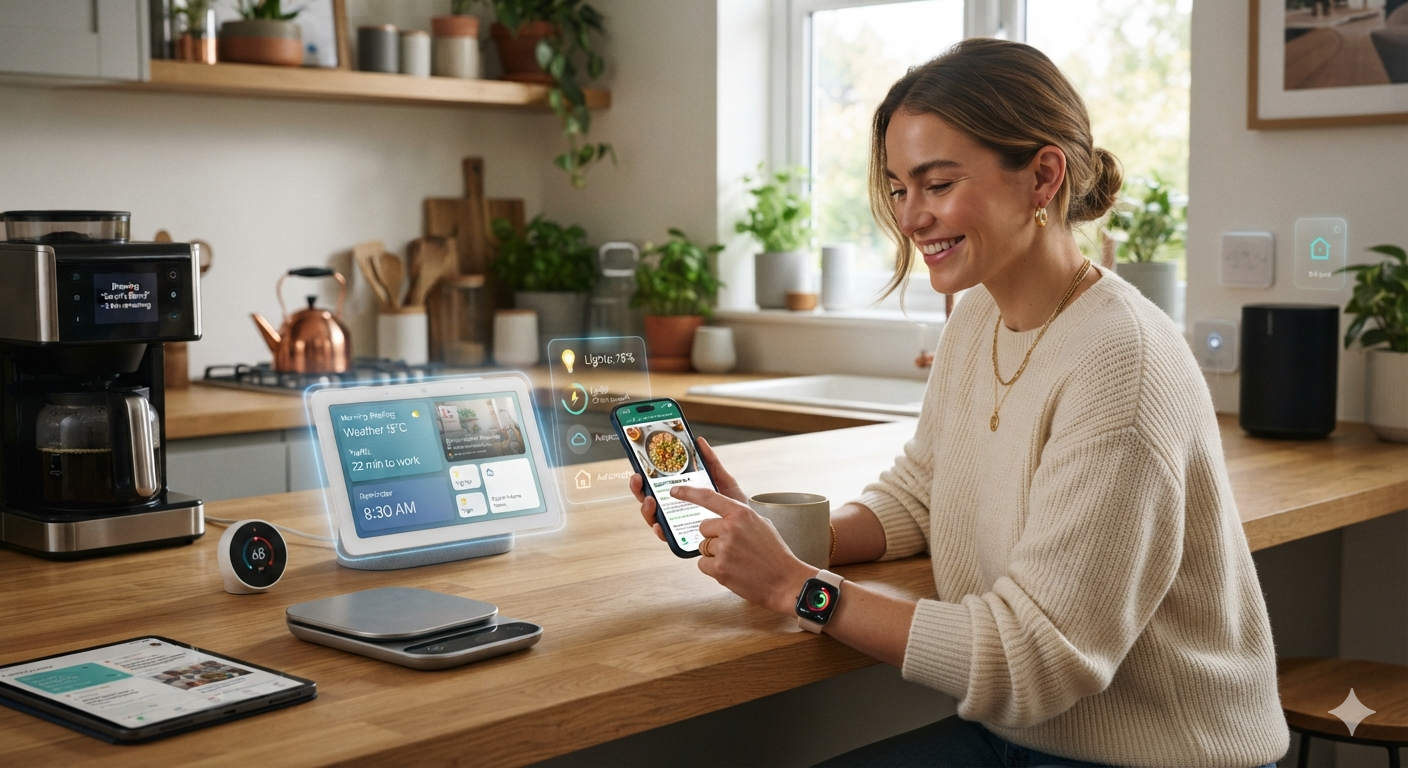
The modern home is becoming increasingly connected.
Smart speakers, security systems, thermostats, lighting, and appliances are using artificial intelligence to learn user preferences and automate everyday tasks.
A smart home powered by AI can adjust temperatures based on habits, improve energy efficiency, identify unusual activity, and create more convenient living environments.
For example, AI-powered security systems can recognize familiar faces, detect suspicious movement, and send alerts when something unusual occurs.
Smart home technology is moving beyond simple automation. The next generation of AI-powered homes will better understand how people live and automatically adjust to their needs.
AI Is Changing the Way We Shop
Shopping has become one of the most visible examples of AI in everyday life.
Online retailers use artificial intelligence to recommend products, predict customer preferences, improve search results, and provide personalized experiences.
When customers receive product suggestions based on previous purchases or browsing behavior, AI is often working behind the scenes.
Businesses also use AI-powered customer service tools to answer questions, track orders, and provide faster support.
In the future, shopping may become even more personalized. AI could help consumers compare products, find better deals, create shopping lists, and make purchasing decisions based on individual preferences.
AI Is Helping People Work Smarter
The workplace is experiencing one of the biggest transformations from artificial intelligence.
AI tools are helping employees save time, automate repetitive tasks, analyze information, and improve productivity.
Professionals in many industries are using AI for:
- Writing and editing
- Data analysis
- Customer communication
- Research
- Project management
- Software development
- Marketing
Rather than replacing every job, AI is becoming a tool that allows people to focus on higher-value tasks.
The most successful workers and companies will likely be those who learn how to use AI effectively alongside their existing skills.
Artificial intelligence is becoming another essential workplace tool, similar to how computers and the internet changed business decades ago.
AI Is Improving Transportation
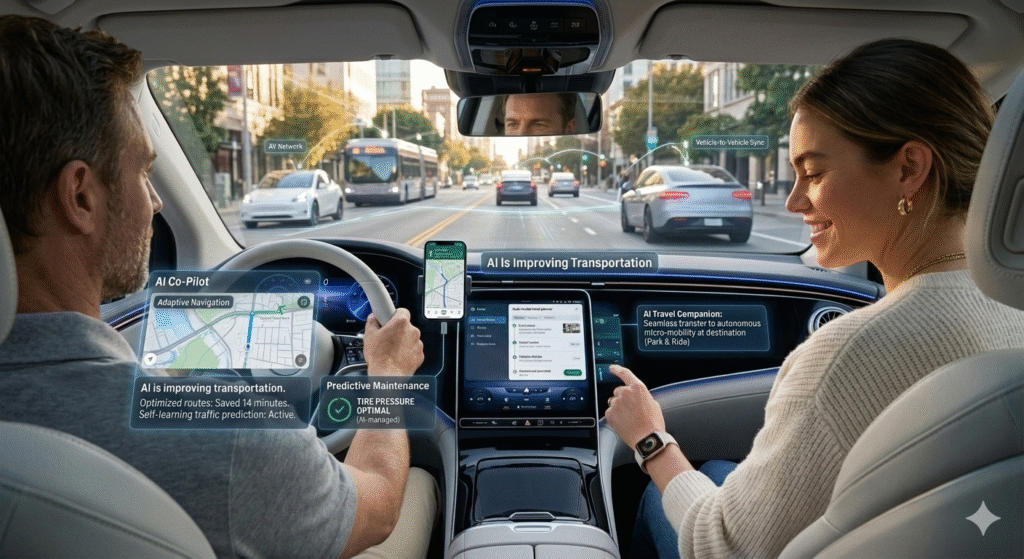
Transportation is another area where artificial intelligence is creating major changes.
Modern vehicles already use AI-powered systems to improve safety and convenience.
Examples include:
- Driver assistance systems
- Automatic emergency braking
- Lane detection
- Traffic prediction
- Navigation improvements
AI helps vehicles understand their surroundings and make faster decisions.
Transportation companies also use AI to optimize routes, reduce fuel usage, and improve delivery efficiency.
As autonomous vehicle technology continues to develop, AI may eventually transform how people travel and how goods move around the world.
AI Is Creating New Opportunities in Education
Education is becoming more personalized through artificial intelligence.
Traditional classrooms often use the same learning approach for every student. AI has the potential to create customized learning experiences based on individual needs.
AI-powered educational tools can help students:
- Practice difficult subjects
- Receive instant feedback
- Learn at their own pace
- Access tutoring support
Teachers can also use AI to save time creating materials, analyzing student progress, and developing personalized learning plans.
The goal is not to replace teachers but to provide additional tools that help students learn more effectively.
AI Is Expanding Human Creativity
Many people once believed creativity was something only humans could achieve.
Artificial intelligence is challenging that idea.
Today, AI tools can help people create images, videos, music, designs, and written content.
Artists, marketers, entrepreneurs, and creators are using AI as a creative partner that helps generate ideas and speed up production.
The most powerful creative results often come from combining human imagination with AI capabilities.
People provide the vision, emotion, and direction, while AI helps bring ideas to life faster.
The Future of AI in Everyday Life
The future of artificial intelligence will likely be defined by deeper integration into daily routines.
AI will continue becoming more personalized, more helpful, and more connected to the tools people already use.
Future AI systems may help manage finances, plan travel, monitor health, organize responsibilities, and provide personalized recommendations throughout the day.
However, as AI becomes more powerful, important conversations around privacy, security, accuracy, and responsible use will continue.
People need confidence that AI systems protect personal information and operate in a transparent way.
The future of AI should focus on improving human experiences, not replacing human connection.
Final Thoughts
AI is changing everyday life in ways that were once considered impossible. What started as an advanced technology used by researchers and large organizations has become a practical tool available to people everywhere.
From healthcare and education to work, shopping, transportation, and entertainment, artificial intelligence is becoming a part of how people live and interact with the world.
The biggest change is that AI is moving from being something people use occasionally to something that works alongside them every day.
The future will not simply be about smarter machines. It will be about creating technology that helps people save time, make better decisions, and accomplish more.
Artificial intelligence is no longer just the future.
It is already part of everyday life.
Related Articles
- AI Agents in Enterprise: Transforming Workflows While Creating New Security Risks
- The Agentic Web: Why AI Agents Are Becoming the New Internet Users
- AI Agents Are Replacing Dashboards: The Rise of Autonomous Enterprise Operations
- AI Without Supervision: The Autonomous AI Agent Security Crisis of 2026
- The AI Job Shift: Why Entry-Level Careers Are Disappearing in 2026
- The AI Privacy Crisis: How Much Does AI Know About You?