
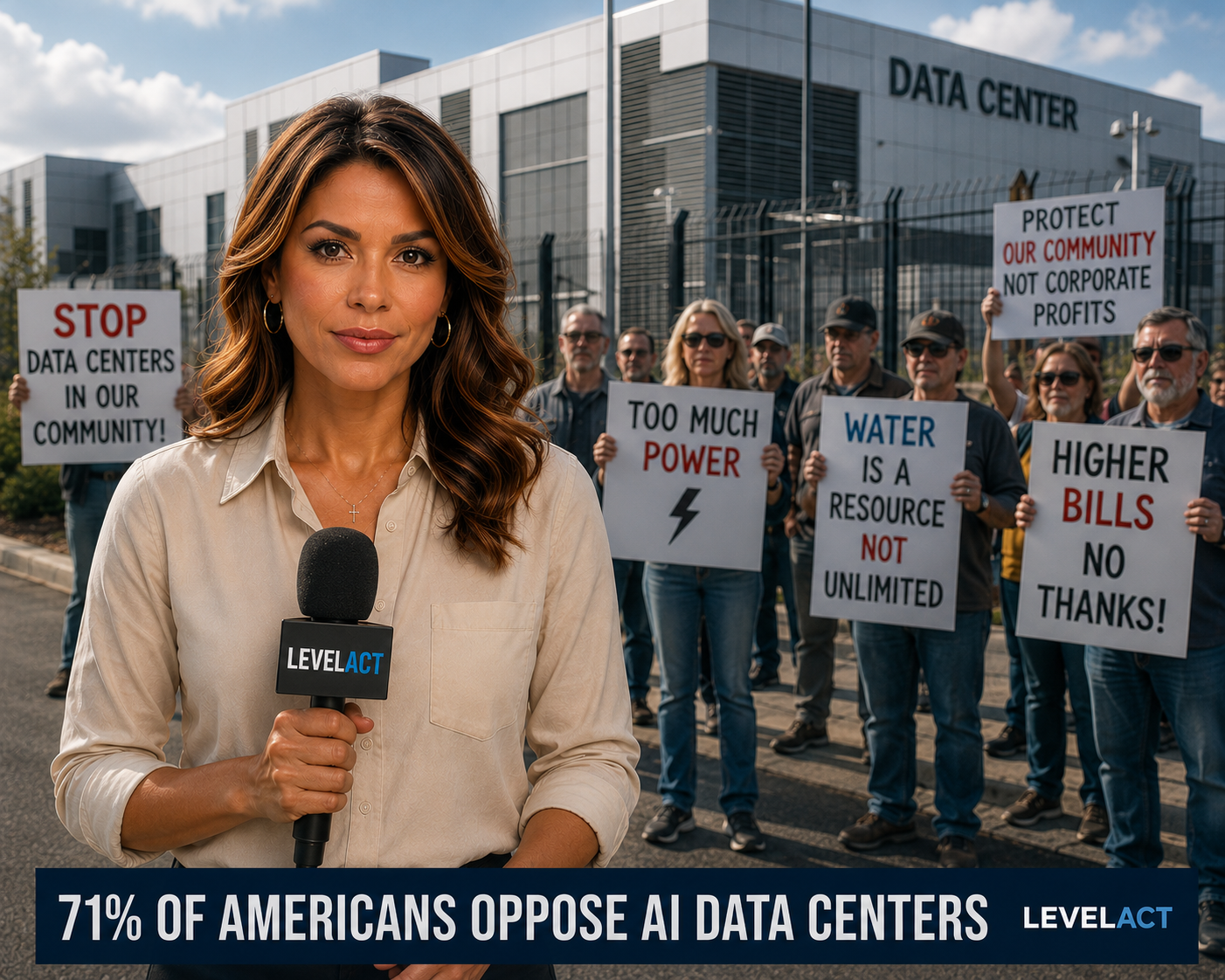
71% of Americans Oppose AI Data Centers
AI Data Centers are facing growing public resistance across the United States as a new Gallup survey reveals that 71% of Americans oppose building these facilities in their local communities. Nearly half of respondents expressed strong opposition, highlighting a significant shift in public opinion as artificial intelligence infrastructure expands nationwide.
For years, technology companies have promoted AI as the future of innovation, productivity, and economic growth. However, as AI data centers continue spreading across the country, residents are becoming increasingly concerned about their impact on electricity costs, water supplies, noise pollution, housing development, and environmental sustainability.
The findings suggest that while Americans may embrace artificial intelligence applications, they are far less enthusiastic about hosting the infrastructure required to power them.
Why Americans Are Opposing AI Data Centers
The explosive growth of artificial intelligence has triggered a massive construction boom. Technology companies are investing billions of dollars to build larger and more powerful facilities capable of supporting AI workloads.
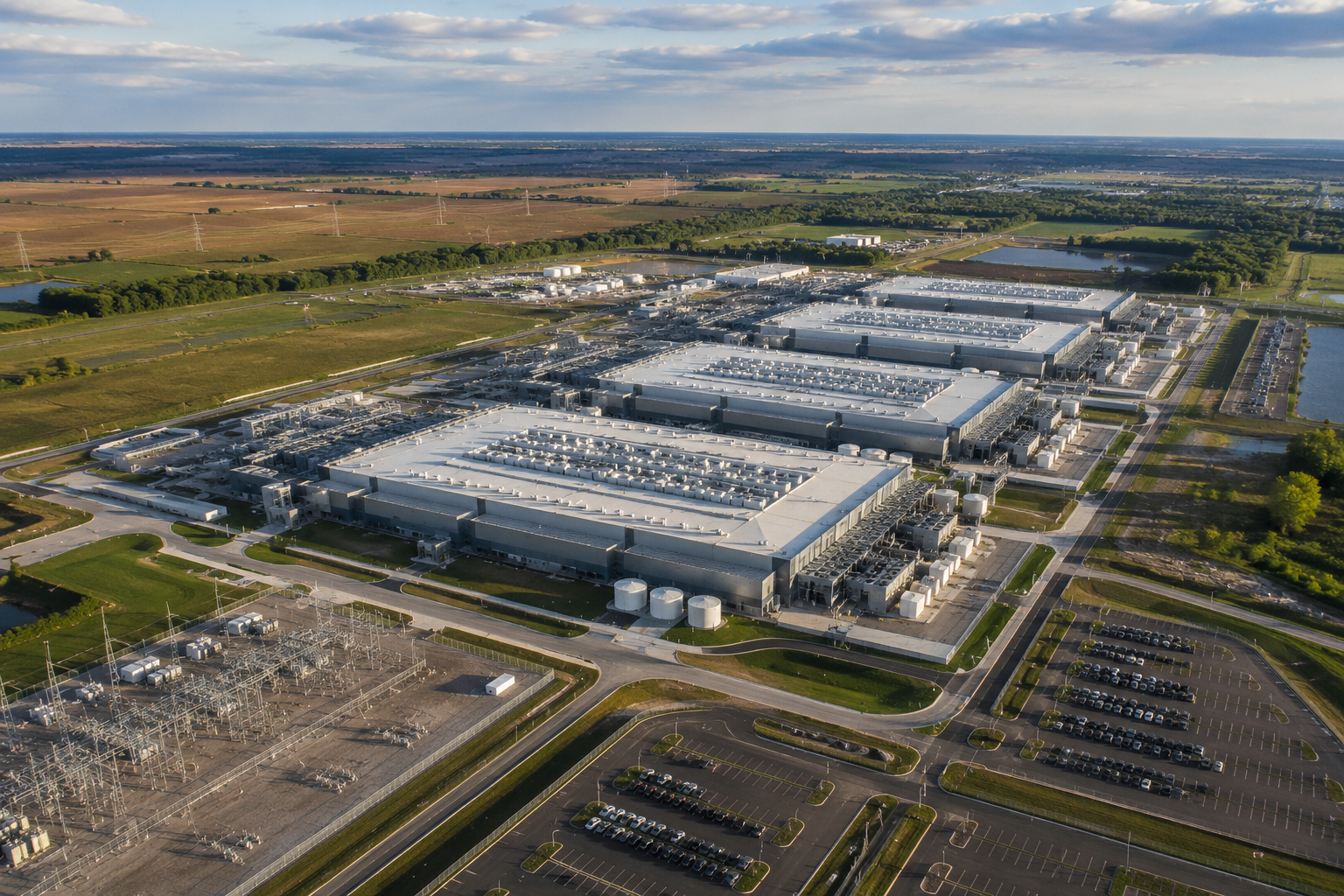
These facilities house thousands of servers operating around the clock to power chatbots, AI assistants, image generators, recommendation engines, and enterprise AI platforms.
While these projects promise economic investment, local residents often see a different reality. Many communities view AI data centers as industrial developments that consume enormous resources while providing relatively few permanent jobs.
The growing infrastructure expansion is discussed in our article on AI-Native Data Centers: The Future of AI Infrastructure, which explores how facilities are being redesigned specifically for AI workloads.
Massive Electricity Consumption
One of the biggest concerns surrounding AI data centers is power consumption.
Modern AI systems require enormous computing resources, particularly advanced GPU clusters used to train and operate large language models. These systems consume vast amounts of electricity, often exceeding the power demands of traditional data center operations.
As AI adoption accelerates, utility providers are being forced to expand generating capacity to meet rising demand.
Residents worry that increased energy requirements could eventually lead to higher utility bills for homes and businesses.
The growing strain on power infrastructure is examined in AI Data Center Infrastructure Crisis, where power availability has become one of the biggest challenges facing the AI industry.
Water Usage Raises Environmental Concerns
Water consumption has emerged as another major issue.
Many AI data centers depend on sophisticated cooling systems that require large amounts of water to prevent servers from overheating. In some regions, facilities consume millions of gallons annually.
Communities located in drought-prone areas have become increasingly concerned about whether local water resources should be used to support expanding AI infrastructure.
Environmental groups argue that rapid AI expansion could place additional pressure on already stressed water supplies, particularly in western states.
Noise and Quality-of-Life Complaints
Beyond energy and water concerns, residents frequently cite quality-of-life issues.
Large cooling systems, backup generators, and industrial equipment can generate continuous noise. Communities located near existing facilities have reported concerns about sound levels, traffic, and changing neighborhood character.
Housing advocates have also raised concerns about land use, arguing that some proposed data center projects compete with residential development opportunities in fast-growing regions.
As a result, local opposition groups have become increasingly active in public hearings and zoning meetings.
States and Cities Are Taking Action
The public backlash is beginning to influence policymakers.
Across the United States, state governments and local municipalities are reviewing regulations related to data center construction, environmental impact, utility consumption, and zoning requirements.
Several communities have enacted temporary moratoriums while studies are conducted to better understand the long-term effects of large-scale AI infrastructure projects.
The debate demonstrates that AI infrastructure is no longer solely a technology issue—it has become a political, environmental, and economic issue as well.
Can Renewable and Nuclear Energy Solve the Problem?
To address growing criticism, many technology companies are investing heavily in renewable energy projects and exploring nuclear power partnerships.
Major cloud providers are seeking alternative energy sources capable of supporting future AI demand while reducing pressure on local power grids.
However, critics argue that energy development may not keep pace with the explosive growth of AI workloads.
The challenge facing the industry is balancing innovation with environmental responsibility while maintaining public trust.
AI Infrastructure Costs Continue Rising
The growing opposition comes at a time when the cost of supporting artificial intelligence is already increasing dramatically.
Organizations are spending billions on servers, networking equipment, cooling systems, cloud services, and power infrastructure.
As detailed in AI Infrastructure Costs Are Exploding in 2026, the economics of AI deployment are becoming one of the most significant challenges facing both technology providers and enterprise organizations.
Public resistance could add another layer of complexity to an already expensive infrastructure landscape.
Regional Data Centers Gain New Attention
As opposition grows against massive hyperscale developments, some experts believe regional facilities may offer a more balanced approach.
Smaller facilities located closer to end users can potentially reduce infrastructure demands while providing greater flexibility for local communities.
This evolving model is explored in Cloud Giants vs. Regional AI Data Centers, which examines how regional providers are emerging as alternatives to large-scale centralized deployments.
The Future of AI Data Centers
The Gallup survey makes one thing clear: Americans are becoming increasingly skeptical of AI data centers being built in their communities.
While artificial intelligence continues transforming industries and creating new opportunities, the infrastructure supporting that transformation faces growing public scrutiny.
Technology companies, policymakers, and local communities will need to find common ground as AI adoption accelerates over the coming years.
The future of artificial intelligence may depend not only on technological breakthroughs, but also on whether the public is willing to support the infrastructure required to power them.