
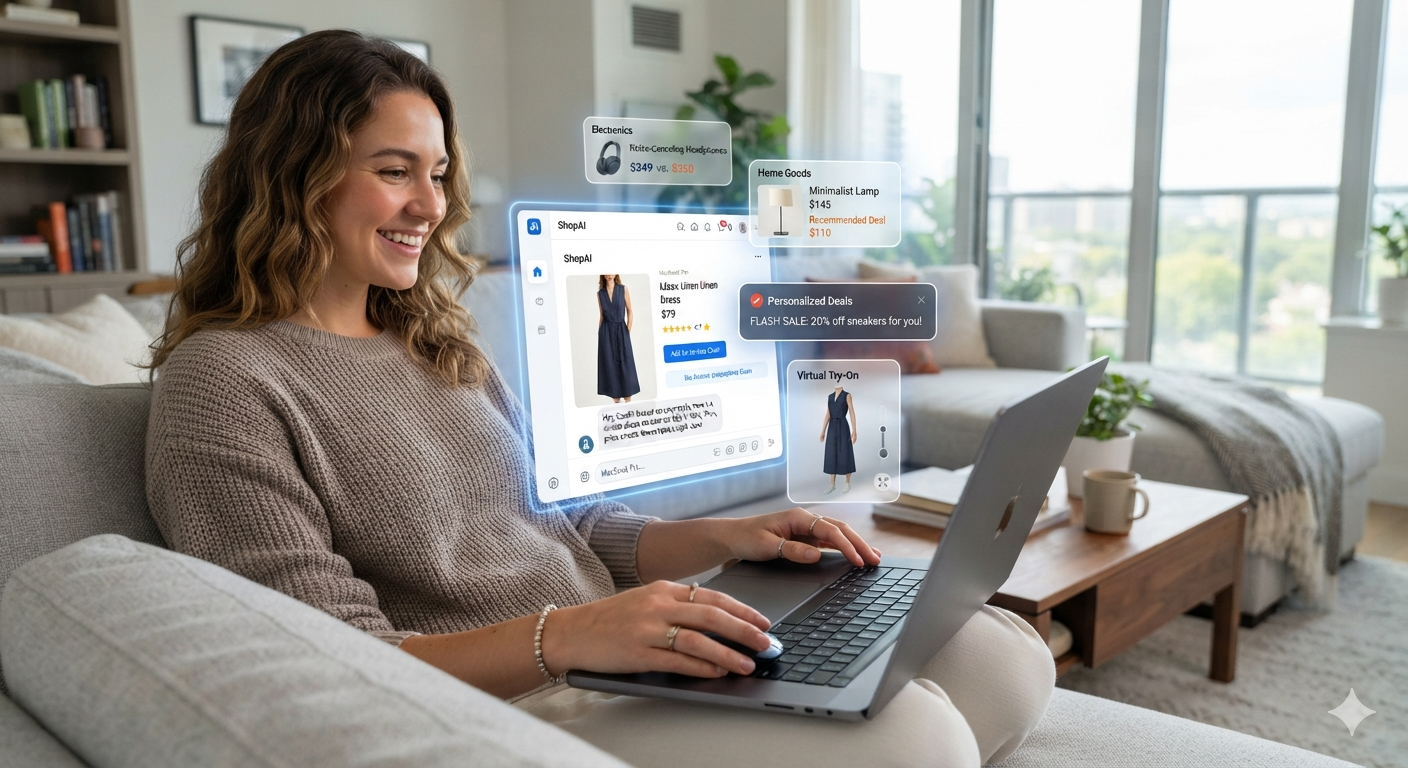
How AI Online Shopping Is Changing Retail Forever in 2026
Online shopping has evolved dramatically over the past decade, but AI online shopping is creating the biggest transformation yet. Artificial intelligence is no longer a futuristic technology reserved for Silicon Valley. Today, it influences nearly every online purchase people make, from recommending products and comparing prices to preventing fraud and providing instant customer support.
Whether you’re shopping for clothes, electronics, groceries, or a new vehicle, AI is quietly working behind the scenes to create a faster, more personalized experience. Businesses of every size are investing heavily in AI because consumers now expect shopping to be convenient, intelligent, and tailored to their preferences.
As AI continues to advance throughout 2026, online shopping is becoming more intuitive than ever before.
AI Online Shopping Creates Personalized Experiences
One of the biggest advantages of AI online shopping is personalization.
Traditional online stores showed the same products to every visitor. Today’s AI systems analyze browsing history, previous purchases, product reviews, wish lists, and shopping habits to recommend items that are most relevant to each individual customer.
Instead of searching through thousands of products, shoppers are presented with options that closely match their interests.
This not only saves time but also improves customer satisfaction while increasing sales for retailers.
Streaming platforms made personalized recommendations popular, and now online retailers are using the same technology to improve the shopping experience.
Smarter Product Recommendations
AI recommendation engines have become remarkably accurate.
They can identify buying patterns among millions of customers and predict what products someone is likely to purchase next.
For example, someone purchasing hiking boots may receive recommendations for backpacks, camping equipment, water bottles, or outdoor clothing.
Someone shopping for a laptop might immediately see compatible accessories, software, monitors, and extended warranty options.
These recommendations are no longer random advertisements—they’re powered by machine learning algorithms that improve continuously as more shopping data becomes available.
AI Shopping Assistants Are Replacing Traditional Search
Typing keywords into a search box is quickly becoming outdated.
Modern AI shopping assistants allow customers to ask questions naturally.
Instead of typing “black running shoes size 10,” shoppers can ask:
“What’s the best lightweight running shoe under $150 for marathon training?”
The AI understands context and returns recommendations based on performance, reviews, pricing, availability, and customer preferences.
This conversational approach makes shopping significantly easier for people who may not know exactly what they’re looking for.
Virtual Try-On Technology Is Reducing Returns
One of the largest problems facing online retailers has always been product returns.
Artificial intelligence is helping solve this challenge through virtual try-on technology.
Consumers can now use their smartphone cameras to see how:
- Glasses look on their face
- Clothing fits their body
- Makeup matches their skin tone
- Furniture appears inside their home
- Paint colors look on their walls
These AI-powered visualization tools increase buyer confidence while reducing expensive returns for retailers.
As augmented reality continues improving, virtual shopping experiences will become even more realistic.
AI Helps Customers Find Better Prices
Price comparison once required visiting multiple websites.
Today, AI tools can automatically compare prices across retailers, monitor discounts, track historical pricing, and notify shoppers when products go on sale.
Some AI assistants even recommend waiting a few days if pricing trends suggest a better deal is likely.
Consumers benefit from greater transparency while retailers compete more aggressively on pricing and service.
For shoppers trying to stretch their budgets, these AI-powered tools can result in significant savings throughout the year.
Customer Service Is Available 24 Hours a Day
Artificial intelligence has dramatically improved customer support.
Modern AI chatbots answer thousands of customer questions every minute without requiring human intervention.
They can help customers:
- Track orders
- Process returns
- Recommend products
- Answer shipping questions
- Explain warranties
- Update account information
- Troubleshoot simple problems
When questions become more complex, AI can transfer conversations to human representatives while providing the full conversation history.
This reduces wait times and improves overall customer satisfaction.
Small Businesses Are Benefiting from AI
Artificial intelligence isn’t only helping large retailers.
Small businesses are increasingly using affordable AI tools to compete with much larger companies.
AI can help small retailers:
- Write product descriptions
- Improve website search
- Generate marketing emails
- Manage inventory
- Predict demand
- Automate customer support
- Optimize advertising campaigns
These capabilities allow smaller companies to provide professional shopping experiences without hiring large technical teams.
As AI tools become more affordable, independent retailers are becoming increasingly competitive.
AI Improves Inventory and Delivery
Behind every successful online purchase is an incredibly complex supply chain.
Artificial intelligence analyzes demand forecasts, seasonal buying trends, weather patterns, shipping delays, and warehouse inventory to ensure products remain available.
Retailers can better predict:
- Popular products
- Inventory shortages
- Shipping demand
- Warehouse staffing needs
- Delivery routes
Consumers experience fewer “out of stock” messages while receiving products more quickly.
AI is also helping delivery companies optimize routes, reducing fuel costs and improving delivery times.
AI Is Fighting Online Fraud
Cybercriminals constantly target online shoppers.
Fortunately, AI has become one of the strongest defenses against fraud.
Machine learning systems continuously monitor transactions looking for unusual behavior such as:
- Unexpected purchase locations
- Suspicious payment methods
- Multiple failed login attempts
- Account takeovers
- Identity theft
- Fake reviews
These systems can detect fraud within seconds, protecting both retailers and consumers before significant damage occurs.
As online shopping continues growing, AI-powered cybersecurity will become even more important.
Privacy Concerns Continue to Grow
Despite its many advantages, AI online shopping raises important privacy questions.
Many consumers don’t realize how much shopping data is collected every day.
Retailers may analyze:
- Browsing history
- Purchase history
- Location information
- Device information
- Shopping frequency
- Search behavior
- Product interests
While this information creates better shopping experiences, it also increases concerns about data privacy and transparency.
Consumers should review privacy settings, understand how their information is used, and shop with trusted retailers that clearly explain their data practices.
Responsible AI depends not only on advanced technology but also on maintaining consumer trust.
The Future of AI Online Shopping
The next generation of AI shopping will be even more intelligent.
Instead of searching for products, consumers may simply tell an AI assistant:
“I need a birthday gift for my father who enjoys fishing and has a budget of $100.”
The AI will compare thousands of products, evaluate reviews, recommend the best options, check pricing, apply coupons, and even complete the purchase after receiving approval.
Some experts believe AI agents will eventually handle routine shopping automatically by ordering household essentials before consumers even realize they’re running low.
Retailers are also investing in AI-generated product videos, interactive shopping experiences, voice commerce, predictive inventory management, and highly personalized digital storefronts.
Conclusion
AI online shopping is transforming how consumers discover, evaluate, and purchase products. From personalized recommendations and virtual try-ons to intelligent shopping assistants and fraud prevention, artificial intelligence is making online retail faster, safer, and more convenient than ever before.
For businesses, AI creates opportunities to improve customer experiences, streamline operations, and compete in an increasingly digital marketplace. For consumers, it means less time searching, smarter purchasing decisions, and greater convenience.
While privacy and data security remain important considerations, one thing is becoming increasingly clear: AI is no longer changing the future of shopping—it is shaping the shopping experience millions of people use every single day.
As AI technology continues to evolve throughout 2026 and beyond, the line between digital assistance and personal shopping expertise will continue to disappear, creating a smarter retail experience for everyone.
- AI Employees Are Arriving: The Rise of the Digital Workforce
- The AI Job Shift: Why Entry-Level Careers Are Disappearing in 2026
- Why Human Talent Will Always Matter in an AI-Driven World
- AI Browser Wars: Why OpenAI, Google, and Perplexity Are Fighting for the Future of Search