The Agentic Web: Why AI Agents Are Becoming the New Internet Users
The internet was originally built for humans. Websites, search engines, online stores, and digital services were all designed around the assumption that a person would visit a webpage, read information, click links, and make decisions. That assumption is beginning to change.
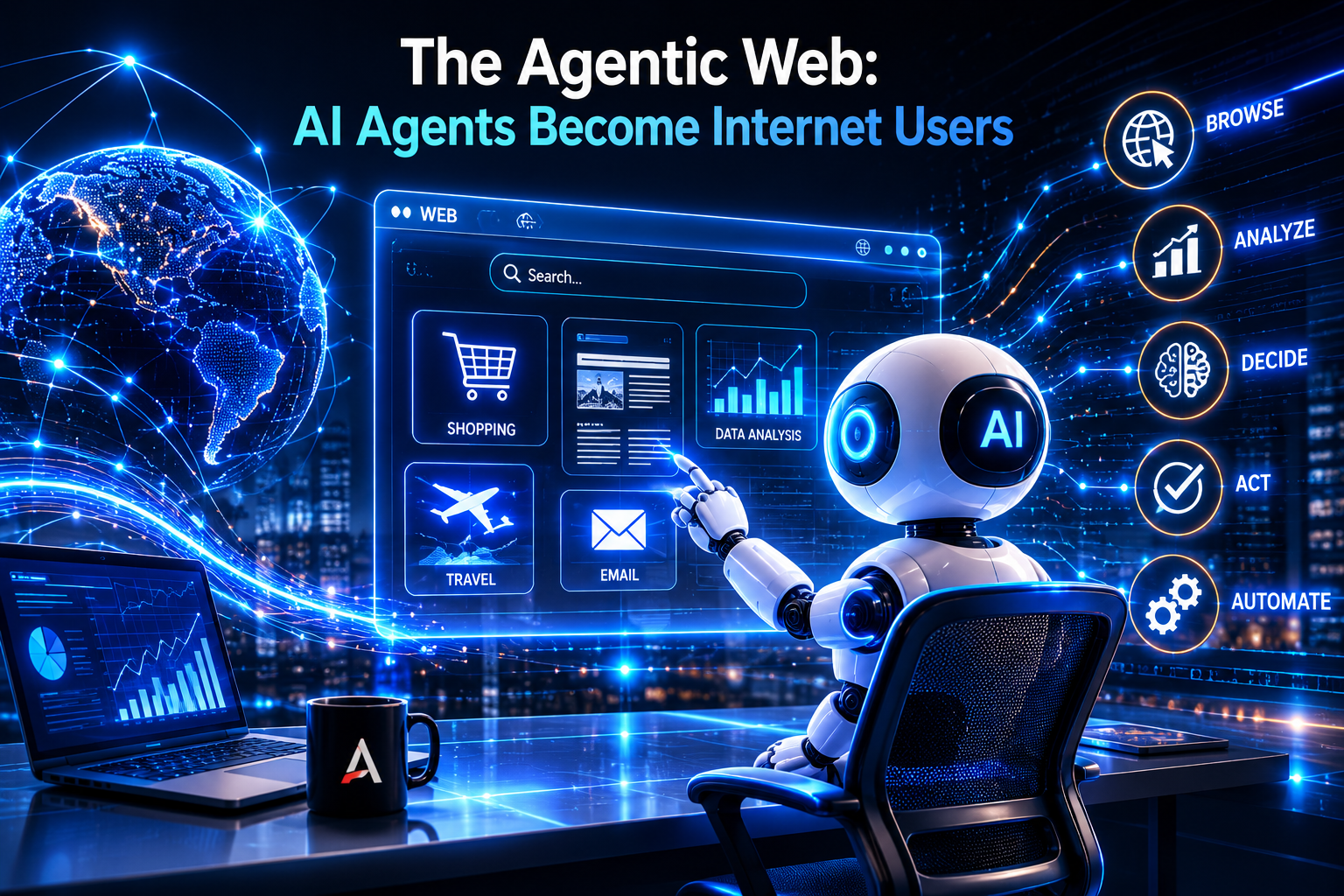
A new concept known as the Agentic Web is rapidly emerging across the technology industry. Instead of humans performing every online task manually, AI agents are increasingly being developed to browse websites, conduct research, compare products, complete transactions, schedule appointments, and interact with digital services on behalf of users.
Many technology leaders believe the Agentic Web could become one of the most significant shifts in internet history, potentially changing how businesses, consumers, and enterprises interact with online information.
What Is the Agentic Web?
The Agentic Web refers to an internet ecosystem where autonomous AI agents act as digital representatives for users. Rather than opening a browser, typing search queries, and reviewing results manually, users can assign tasks to AI agents that perform those actions independently.
An AI agent might:
- Research software vendors
- Compare pricing across multiple websites
- Book travel arrangements
- Schedule meetings
- Purchase products
- Monitor market trends
- Generate reports
- Complete repetitive online workflows
Instead of visiting dozens of websites themselves, users may simply provide instructions and allow AI agents to handle the process.
This concept represents a major evolution beyond traditional search engines and chatbots.
From Search Engines to Intelligent Agents
The rise of large language models has accelerated interest in autonomous AI systems. Companies including OpenAI, Google, Microsoft, Anthropic, and numerous startups are investing heavily in technologies that enable AI systems to perform multi-step tasks across the internet.
Traditional search engines provide links and information.
AI agents go much further.
Instead of delivering a list of websites, an AI agent can analyze options, compare results, perform actions, and return completed outcomes.
This shift is one reason many experts believe the AI Browser Wars are becoming increasingly important. Future browsers may function less as navigation tools and more as execution platforms for AI-powered agents.
Why Enterprises Are Paying Attention
Enterprise organizations are particularly interested in the Agentic Web because of the potential productivity gains.
Businesses spend countless hours performing repetitive digital tasks that involve research, data collection, compliance checks, customer interactions, and workflow management.
AI agents can automate many of these activities.
Potential enterprise use cases include:
- Vendor evaluations
- Competitive intelligence gathering
- Procurement research
- Customer support automation
- Security monitoring
- Financial reporting
- Compliance audits
Organizations already deploying AI systems are discovering that autonomous agents can significantly reduce manual workloads while improving operational efficiency.
The Infrastructure Challenge
While the Agentic Web offers enormous potential, it also introduces substantial infrastructure demands.
Millions of autonomous AI agents continuously interacting with websites would generate unprecedented levels of internet activity.
Data centers, cloud providers, networking systems, and enterprise infrastructure platforms may require significant upgrades to support large-scale AI agent traffic.
This trend aligns with the broader movement toward AI-driven enterprise operations explored in our coverage of AI Agents Replacing Dashboards.
As AI becomes more capable of acting independently, infrastructure requirements will continue expanding.
Security and Accountability Concerns
The growth of autonomous agents also raises important security questions.
Organizations must determine:
- How agents authenticate identities
- How permissions are managed
- How transactions are verified
- How sensitive data is protected
- How AI-generated actions are audited
These concerns overlap with issues discussed in the AI Accountability Crisis affecting many organizations today.
If an autonomous AI agent makes a purchasing decision, signs a contract, or exposes sensitive information, responsibility and accountability become increasingly complex.
Regulators and enterprise security teams are actively exploring governance frameworks to address these challenges.
The Future of the Agentic Web
The Agentic Web remains in its early stages, but momentum is accelerating rapidly.
As AI models become more capable, businesses and consumers will increasingly rely on intelligent agents to interact with digital services. Websites, search platforms, e-commerce systems, and enterprise applications will likely evolve to accommodate AI-driven visitors alongside human users.
The long-term impact could be profound.
Just as mobile devices transformed the internet during the smartphone era, autonomous AI agents may redefine how people access information, conduct business, and complete online tasks.
The Agentic Web is no longer a theoretical concept. It is quickly becoming the next major evolution of the internet, and organizations that prepare for this transition today may gain a significant advantage in the years ahead.
Releated Articles
AI Browser Wars
AI Agents Replacing Dashboards