• About Us
  • Advertise With Us

Monday, June 15, 2026

  • Home
  • AI
  • Cloud
  • DevOps
  • Security
  • Webinars
  • Videos
  • Home
  • AI
  • Cloud
  • DevOps
  • Security
  • Webinars
  • Videos
Home Cloud

Why Cloud Architectures Are Getting More Complex, Not Simpler

By Barbara Capasso, Senior Technology Analyst

Barbara Capasso by Barbara Capasso
January 12, 2026
in Cloud
0
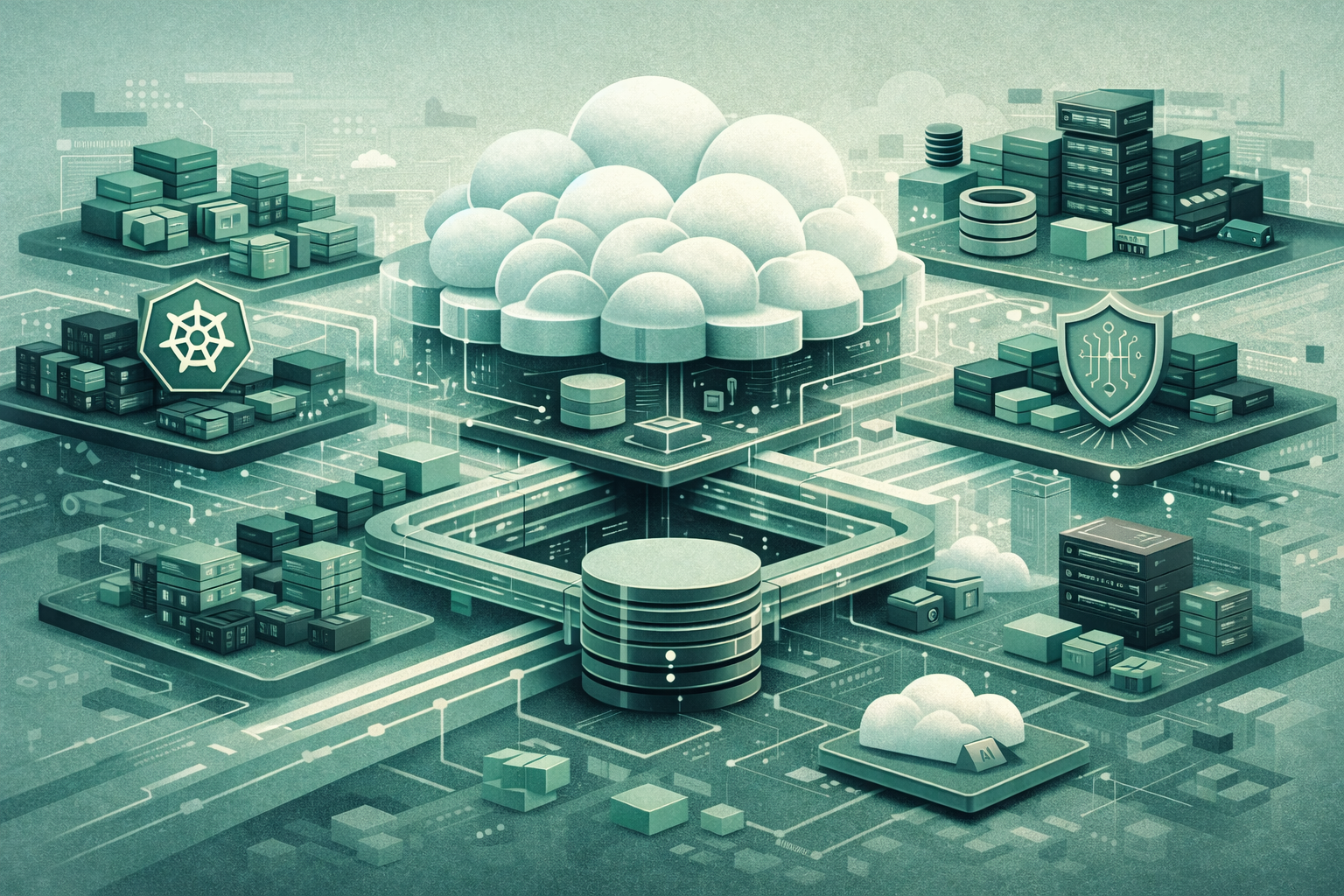
Isometric illustration showing the growing complexity of modern cloud architectures with interconnected platforms, services, and infrastructure layers.

Modern cloud environments are increasingly complex as platforms, services, and infrastructure layers continue to expand.

151
SHARES
3k
VIEWS
Share on FacebookShare on Twitter

Cloud computing was supposed to simplify infrastructure. Abstract the hardware, outsource the undifferentiated heavy lifting, and allow teams to focus on building products.

For a time, it worked.

But in 2026, many organizations are coming to the same conclusion: cloud architectures are getting more complex, not simpler.

This complexity is not accidental. It is the result of layered decisions made over years—each reasonable in isolation, but collectively difficult to manage.


The Myth of Cloud Simplicity

Early cloud adoption replaced physical servers with virtual machines. The mental model was familiar, and the operational gains were immediate.

Since then, the cloud has evolved rapidly. Managed services, containers, orchestration platforms, serverless functions, and AI infrastructure have all promised greater efficiency and abstraction.

Instead, teams now manage:

  • Multiple compute models

  • Dozens of managed services

  • Distributed identity and access policies

  • Hybrid and multi-cloud environments

The infrastructure may be abstracted—but the architecture is anything but simple.


Managed Services Multiply, Ownership Shrinks

Managed services are designed to reduce operational burden. In practice, they often introduce new dependencies and failure modes.

Each managed database, messaging service, or AI platform has:

  • Its own configuration model

  • Its own scaling behavior

  • Its own security boundaries

  • Its own cost profile

Teams consume these services quickly, but rarely standardize how they are used. Over time, architectural consistency erodes.

When incidents occur, ownership becomes unclear. Is the problem with the application, the platform team, or the provider?


Hybrid and Multi-Cloud Are Now the Default

Few organizations operate entirely within a single cloud. Regulatory requirements, data locality, latency concerns, and vendor risk all push teams toward hybrid and multi-cloud architectures.

This introduces unavoidable complexity:

  • Networking across environments

  • Identity federation

  • Data synchronization

  • Operational tooling fragmentation

Even with abstraction layers, teams must understand the underlying differences. Cloud neutrality sounds simple in theory, but it demands deep expertise in practice.


Kubernetes Didn’t Simplify Everything

Containers and Kubernetes promised portability and standardization. They delivered—but at a cost.

Kubernetes environments often require:

  • Custom networking models

  • Service meshes

  • Policy engines

  • Observability stacks

  • Platform-specific extensions

What was once managed at the infrastructure level now lives inside platform layers maintained by internal teams.

For many organizations, the platform team has quietly become a cloud provider within the cloud.


Security and Governance Add Necessary Friction

As architectures grow more distributed, security requirements increase.

Cloud environments now involve:

  • Multiple identity systems

  • Fine-grained access controls

  • Encryption across services

  • Compliance monitoring

These controls are essential—but they also introduce friction. Policies must be enforced consistently across environments that were never designed to operate together.

Security does not create complexity on its own. It exposes the complexity that already exists.


AI Infrastructure Accelerates the Trend

AI workloads have intensified architectural sprawl.

Organizations now add:

  • GPU-enabled compute pools

  • Specialized storage layers

  • Model pipelines

  • Inference services

  • Data governance controls

AI systems often bypass traditional application architectures, creating parallel stacks that must still integrate with existing platforms.

The result is not replacement—but accumulation.


Why Abstraction Has Limits

Abstraction is valuable, but it cannot eliminate complexity—it only moves it.

As organizations stack abstractions on top of abstractions, troubleshooting becomes harder. Visibility decreases. Mental models fracture.

At some point, teams must understand what lies beneath the abstraction—or risk losing control entirely.


What Effective Teams Are Doing Instead

High-performing organizations are not chasing simplicity. They are managing complexity deliberately.

They:

  • Standardize architectural patterns

  • Limit service sprawl

  • Define clear ownership models

  • Invest in platform governance

  • Treat architecture as a product

Rather than hiding complexity, they make it visible, understandable, and intentional.


Complexity Is the New Normal

Cloud computing did not fail. It succeeded beyond expectations.

But success brought scale, diversity, and new demands. The challenge for modern teams is not to eliminate complexity—but to design systems that can sustain it.

In 2026, cloud maturity is no longer about how little infrastructure you manage.
It’s about how well you understand the architecture you’ve built.


Tags: cloud architecturecloud complexitycloud governancecloud securityenterprise cloudhybrid cloudinfrastructure architectureKubernetes platformsmulti-cloud strategyplatform engineering
Previous Post

Why Most AI Projects Never Reach Production

Next Post

Agentic AI in the Enterprise: From Assistants to Autonomous Operators

Next Post
Agentic AI transforming enterprise operations with autonomous digital agents

Agentic AI in the Enterprise: From Assistants to Autonomous Operators

  • Trending
  • Comments
  • Latest
AI in DevOps automation concept with cloud, pipelines, and artificial intelligence systems

Agentic AI Is Reshaping DevOps and Enterprise Automation in 2026

March 19, 2026
Agentic AI managing automated DevOps CI/CD pipeline infrastructure

Agentic AI in DevOps Pipelines: From Assistants to Autonomous CI/CD

March 9, 2026
AI cybersecurity systems detecting and defending against AI-powered cyber threats

The AI Cybersecurity Arms Race: When Intelligent Threats Meet Intelligent Defenses

March 10, 2026
DevOps feedback loops in a modern CI/CD pipeline

DevOps Feedback Loops: The Hidden Bottleneck Slowing CI/CD

March 9, 2026
Microsoft Empowers Copilot Users with Free ‘Think Deeper’ Feature: A Game-Changer for Intelligent Assistance

Microsoft Empowers Copilot Users with Free ‘Think Deeper’ Feature: A Game-Changer for Intelligent Assistance

0
Can AI Really Replace Developers? The Reality vs. Hype

Can AI Really Replace Developers? The Reality vs. Hype

0
AI and Cloud

Is Your Organization’s Cloud Ready for AI Innovation?

0
Top DevOps Trends to Look Out For in 2025

Top DevOps Trends to Look Out For in 2025

0
Digital workforce powered by AI employees working alongside human professionals in a modern enterprise office.

AI Employees Are Arriving: The Rise of the Digital Workforce

June 11, 2026
The AI Privacy Crisis Family using smartphones, tablets, and smart devices as artificial intelligence collects and analyzes personal data in everyday life.

The AI Privacy Crisis: How Much Does AI Know About You?

June 10, 2026
Young professionals reviewing company job openings as artificial intelligence automates many entry-level positions across multiple industries.

The AI Job Shift: Why Entry-Level Careers Are Disappearing in 2026

June 10, 2026
AI in DevOps enterprise engineering team using AI-powered automation and cloud infrastructure management tools

AI in DevOps: Separating Hype from Enterprise Reality

June 9, 2026
ADVERTISEMENT

Welcome to LevelAct — Your Daily Source for DevOps, AI, Cloud Insights and Security.

Follow Us

Linkedin

Browse by Category

  • AI
  • Cloud
  • DevOps
  • Security
  • AI
  • Cloud
  • DevOps
  • Security

Quick Links

  • About
  • Advertising
  • Privacy Policy
  • Editorial Policy
  • About
  • Advertising
  • Privacy Policy
  • Editorial Policy

Subscribe Our Newsletter!

Be the first to know
Topics you care about, straight to your inbox

Level Act LLC, 8331 A Roswell Rd Sandy Springs GA 30350.

No Result
View All Result
  • About
  • Advertising
  • AI Accountability Crisis, Video Briefing with Veronica
  • AI Agents Are Replacing Dashboards: The Rise of Autonomous Enterprise Operations
  • AI Agents Are Replacing SaaS: Enterprise Software Disruption
  • AI Browser Wars: Colton Reed Reveals the Future of Search
  • AI Data Center Infrastructure Crisis: Power, Cooling, and Scaling Limits
  • AI Data Centers Face Growing Water Crisis Video
  • AI Data Poisoning Is the Next Enterprise Cybersecurity Crisis
  • AI Governance Is Becoming a Competitive Advantage | Jennifer Briefing
  • AI Infrastructure Wars: Why Enterprises Are Building Private AI Clouds
  • AI Job Interviews Are Changing Forever | Video Briefing with Naomi
  • AI Privacy Crisis: How Much Does AI Know About You?
  • AI-Driven DevOps: Why Enterprise Teams Are Rebuilding Around AI
  • AI-Native Data Centers: The Future of AI Infrastructure
  • AI-Powered Cyberattacks Video Briefing with Jennifer
  • Autonomous AI Agent Security Crisis of 2026
  • Calendar View
  • Cloud Giants vs. Regional AI Data Centers: The New Battle for Compute
  • Editorial Policy
  • Events
  • Home
  • LevelAct Webinars
  • LevelAct Webinars: Expert Insights on AI, Cloud, DevOps, and Security
  • Meta Quietly Launches ‘Forum’ — A New Reddit-Style Community Platform
  • Privacy Policy
  • The Agentic Web: AI Agents Are Becoming Internet Users
  • The End of Search: Are AI Assistants Replacing Google?
  • The Future of Agentic Software Delivery: Unifying Source & Binaries
  • Vertical Cloud Infrastructure Is Reshaping Enterprise IT
  • Videos
  • Webinar Solutions
  • Why Platform Engineering Is Replacing Traditional DevOps

© 2026 JNews - Premium WordPress news & magazine theme by Jegtheme.