• About Us
  • Advertise With Us

Wednesday, July 1, 2026

  • Home
  • AI
  • Cloud
  • DevOps
  • Security
  • Webinars
  • Videos
  • Home
  • AI
  • Cloud
  • DevOps
  • Security
  • Webinars
  • Videos
Home Cloud

What Is Serverless Computing? A Complete Guide to Types, Benefits, and Challenges

Barbara Capasso by Barbara Capasso
May 4, 2025
in Cloud
0
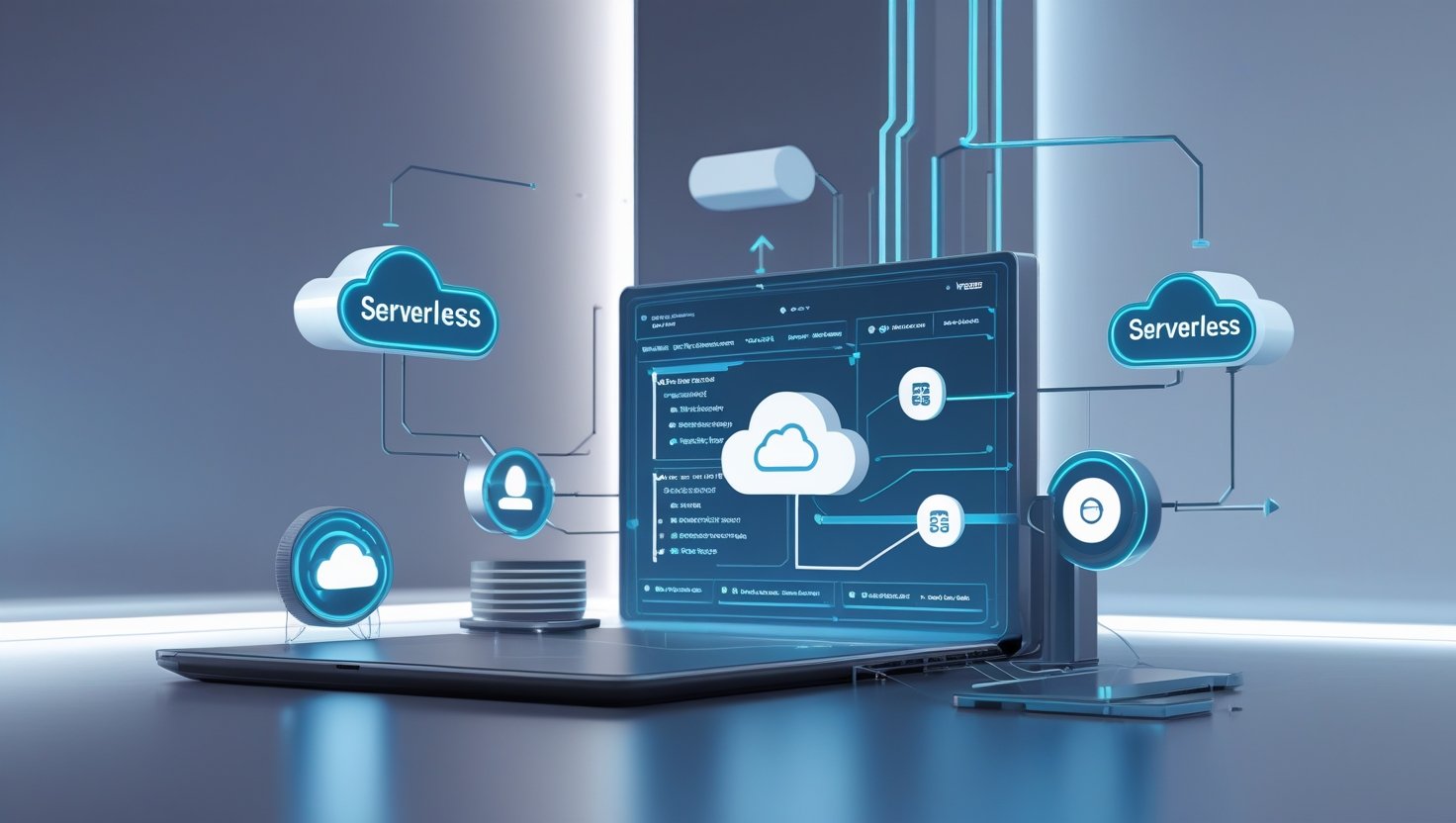
computing with cloud triggers and auto-scaling functions
172
SHARES
3.4k
VIEWS
Share on FacebookShare on Twitter

By Barbara Capasso | LevelAct.com

Serverless computing isn’t a buzzword anymore—it’s a transformative cloud-native architecture that’s redefining how modern apps are built and scaled. Despite the name, serverless doesn’t mean “no servers”—it means that developers don’t have to manage them. Cloud providers handle all the infrastructure, so you can focus solely on code.

In this article, we’ll break down what serverless computing really means, explore its types, highlight the benefits, and dive into the challenges enterprises must navigate to use it effectively.


🚀 What Is Serverless Computing?

Serverless computing is a cloud execution model where the cloud provider dynamically manages the allocation and provisioning of servers. You write the code, upload it to the cloud, and it runs only when triggered—automatically scaling up or down.

Unlike traditional server-based models or even container orchestration platforms like Kubernetes, serverless allows developers to build and deploy without thinking about the underlying infrastructure.

Two popular serverless models include:

  • Function-as-a-Service (FaaS): Runs discrete code functions in response to events (e.g., AWS Lambda).

  • Backend-as-a-Service (BaaS): Offloads backend tasks like authentication, storage, or database (e.g., Firebase, AWS Amplify).


🔧 Types of Serverless Computing

1. Function-as-a-Service (FaaS)

  • Executes functions on demand in stateless compute containers.

  • Example: AWS Lambda, Azure Functions, Google Cloud Functions.

2. Backend-as-a-Service (BaaS)

  • Provides ready-to-use backend services like databases, identity, and file storage.

  • Example: Firebase, Hasura, Supabase.

3. Event-Driven Architectures

  • Triggered by events such as API calls, database updates, or IoT signals.

  • Great for real-time processing and microservices.


✅ Benefits of Serverless Computing

1. No Infrastructure Management

Forget provisioning, scaling, patching, or managing VMs—your provider does it all.

2. Auto-Scaling

Serverless platforms scale up instantly when demand spikes and scale down to zero when idle—perfect for unpredictable workloads.

3. Cost Efficiency

You pay only for what you use. No idle server time means no wasted money. This model is especially attractive for startups and agile dev teams.

4. Faster Time to Market

With less infrastructure overhead, developers focus more on code and business logic—accelerating innovation cycles.

5. Built-In High Availability

Major platforms offer high availability and fault tolerance by default—no extra configuration needed.


⚠️ Challenges of Serverless Computing

1. Cold Starts

When functions haven’t been called in a while, the platform may need to “wake up” an instance, introducing latency. This is a major concern for performance-critical applications.

2. Vendor Lock-In

Each cloud provider has its own tooling, limits, and service integrations. Migrating from one to another can be difficult once you’re deep in.

3. Observability and Debugging

Serverless environments abstract away much of the infrastructure, making logs and metrics harder to access. Tools like AWS X-Ray and Datadog help, but require setup.

4. Security Considerations

While the provider handles infrastructure security, your application code still needs strong guardrails—especially around API exposure, event injection, and data leaks.


🧠 Real-World Use Cases

  • Microservices: Each function handles a single job, perfect for loosely coupled services.

  • Data Pipelines: Serverless works well for event-driven ETL or real-time processing.

  • Chatbots & APIs: Serverless backends are ideal for APIs that don’t run 24/7.

  • IoT: Event triggers respond to device inputs instantly without overprovisioning resources.


🔄 Serverless vs Containers

Feature Serverless Containers
Infrastructure Fully managed Developer managed
Start Time Cold start risk Persistent runtime
Cost Pay-per-execution Pay-for-uptime
Control Limited (high abstraction) High control
Use Case Fit Event-driven, short tasks Long-running processes

🌐 Should You Go Serverless?

If you’re launching new services, need to respond to bursts of traffic, or want to innovate without infrastructure drag—yes, serverless is worth exploring.

However, if your application demands ultra-low latency, complex runtime dependencies, or persistent compute, containers or hybrid approaches may be better suited.

Many companies now adopt serverless for edge workloads, CI/CD automation, or non-critical APIs—freeing their dev teams to move faster with fewer DevOps headaches.


🧭 Final Thoughts

Serverless computing is a game-changer—but not a one-size-fits-all solution. It shines when used strategically, especially for modern cloud-native applications that benefit from agility, scalability, and cost control.

As the cloud evolves, expect serverless to expand beyond FaaS and BaaS into AI model execution, Edge computing, and decentralized app architectures.


Tags: AWS LambdaAzure FunctionsBaaSbackend as a serviceCloud Computingcloud-nativeDevOpsevent-driven architectureFaaSinfrastructure automationserverless architectureserverless benefitsserverless challengesServerless Computingserverless security
Previous Post

Prescriptive Analytics in Action: How AI BI Tools Speed Up Decision-Making

Next Post

Echoworx MYOK with AWS KMS: Full Control for Encrypted Email

Next Post
Echoworx MYOK with AWS KMS

Echoworx MYOK with AWS KMS: Full Control for Encrypted Email

  • Trending
  • Comments
  • Latest
AI in DevOps automation concept with cloud, pipelines, and artificial intelligence systems

Agentic AI Is Reshaping DevOps and Enterprise Automation in 2026

March 19, 2026
Agentic AI managing automated DevOps CI/CD pipeline infrastructure

Agentic AI in DevOps Pipelines: From Assistants to Autonomous CI/CD

March 9, 2026
AI cybersecurity systems detecting and defending against AI-powered cyber threats

The AI Cybersecurity Arms Race: When Intelligent Threats Meet Intelligent Defenses

March 10, 2026
DevOps feedback loops in a modern CI/CD pipeline

DevOps Feedback Loops: The Hidden Bottleneck Slowing CI/CD

March 9, 2026
Microsoft Empowers Copilot Users with Free ‘Think Deeper’ Feature: A Game-Changer for Intelligent Assistance

Microsoft Empowers Copilot Users with Free ‘Think Deeper’ Feature: A Game-Changer for Intelligent Assistance

0
Can AI Really Replace Developers? The Reality vs. Hype

Can AI Really Replace Developers? The Reality vs. Hype

0
AI and Cloud

Is Your Organization’s Cloud Ready for AI Innovation?

0
Top DevOps Trends to Look Out For in 2025

Top DevOps Trends to Look Out For in 2025

0
AI instead of Google showing a person using artificial intelligence for search and answers

Why Millions Are Switching to AI Instead of Google in 2026

June 30, 2026
Everyday people using AI in daily life including students, office workers, parents, and small business owners using AI tools to write, search, and learn faster

Everyday People Using AI Are Quietly Changing the Internet

June 26, 2026
AI IT Help Desk using artificial intelligence to automate enterprise technical support and customer service requests

AI IT Help Desk Is Eliminating the Traditional Help Desk

June 25, 2026
Digital workforce powered by AI employees working alongside human professionals in a modern enterprise office.

AI Employees Are Arriving: The Rise of the Digital Workforce

June 11, 2026
ADVERTISEMENT

Welcome to LevelAct — Your Daily Source for DevOps, AI, Cloud Insights and Security.

Follow Us

Linkedin

Browse by Category

  • AI
  • Cloud
  • DevOps
  • Security
  • AI
  • Cloud
  • DevOps
  • Security

Quick Links

  • About
  • Advertising
  • Privacy Policy
  • Editorial Policy
  • About
  • Advertising
  • Privacy Policy
  • Editorial Policy

Subscribe Our Newsletter!

Be the first to know
Topics you care about, straight to your inbox

Level Act LLC, 8331 A Roswell Rd Sandy Springs GA 30350.

No Result
View All Result
  • About
  • Advertising
  • AI Accountability Crisis, Video Briefing with Veronica
  • AI Agents Are Replacing Dashboards: The Rise of Autonomous Enterprise Operations
  • AI Agents Are Replacing SaaS: Enterprise Software Disruption
  • AI Browser Wars: Colton Reed Reveals the Future of Search
  • AI Data Center Infrastructure Crisis: Power, Cooling, and Scaling Limits
  • AI Data Centers Face Growing Water Crisis Video
  • AI Data Poisoning Is the Next Enterprise Cybersecurity Crisis
  • AI Governance Is Becoming a Competitive Advantage | Jennifer Briefing
  • AI Infrastructure Wars: Why Enterprises Are Building Private AI Clouds
  • AI IT Help Desk: The End of Traditional Enterprise Support | Video Briefing with Veronica
  • AI Job Interviews Are Changing Forever | Video Briefing with Naomi
  • AI Privacy Crisis: How Much Does AI Know About You?
  • AI-Driven DevOps: Why Enterprise Teams Are Rebuilding Around AI
  • AI-Native Data Centers: The Future of AI Infrastructure
  • AI-Powered Cyberattacks Video Briefing with Jennifer
  • Autonomous AI Agent Security Crisis of 2026
  • Calendar View
  • Cloud Giants vs. Regional AI Data Centers: The New Battle for Compute
  • Editorial Policy
  • Events
  • Everyday People Using AI
  • Home
  • LevelAct Webinars
  • LevelAct Webinars: Expert Insights on AI, Cloud, DevOps, and Security
  • Meta Quietly Launches ‘Forum’ — A New Reddit-Style Community Platform
  • Privacy Policy
  • The Agentic Web: AI Agents Are Becoming Internet Users
  • The End of Search: Are AI Assistants Replacing Google?
  • The Future of Agentic Software Delivery: Unifying Source & Binaries
  • Vertical Cloud Infrastructure Is Reshaping Enterprise IT
  • Videos
  • Webinar Solutions
  • Why Platform Engineering Is Replacing Traditional DevOps

© 2026 JNews - Premium WordPress news & magazine theme by Jegtheme.