• About Us
  • Advertise With Us

Wednesday, July 1, 2026

  • Home
  • AI
  • Cloud
  • DevOps
  • Security
  • Webinars
  • Videos
  • Home
  • AI
  • Cloud
  • DevOps
  • Security
  • Webinars
  • Videos
Home Cloud

Cracking the ETL Black Box: Tracing Data Workflows with AWS X-Ray and OpenTelemetry

Marc Mawhirt by Marc Mawhirt
May 3, 2025
in Cloud
0
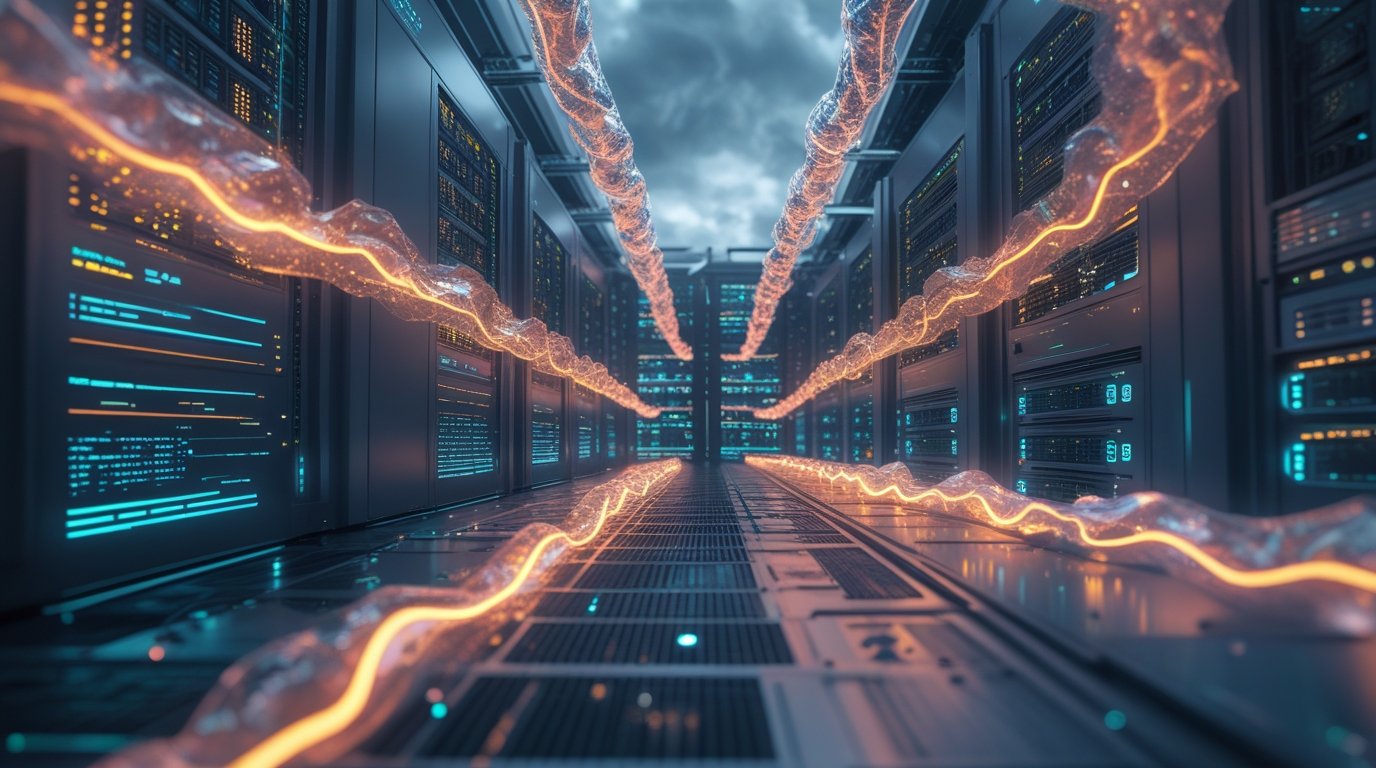
ETL observability with AWS X-Ray and OpenTelemetry

Tracing ETL workloads with AWS X-Ray and OpenTelemetry reveals deep insights into data pipeline performance, latency, and system resilience.

160
SHARES
3.2k
VIEWS
Share on FacebookShare on Twitter

How to Gain Full-Stack Observability for Data Pipelines in the Cloud


By Marc Mawhirt

ETL observability is reshaping the way organizations monitor, debug, and optimize their modern data pipelines—especially as more teams rely on AWS X-Ray and OpenTelemetry for end-to-end visibility. But as cloud-native architectures scale across services and regions, these pipelines often operate like black boxes—opaque, fragmented, and difficult to debug.

When data workflows stretch across AWS Lambda, Amazon S3, Redshift, Glue, and multiple microservices, traditional logging and monitoring solutions simply can’t keep up. Errors go unnoticed. Latency creeps in. And compliance teams are left guessing where data actually came from.

That’s why observability is no longer optional—especially in 2025. Forward-looking engineering teams are turning to AWS X-Ray and OpenTelemetry to bring clarity, traceability, and optimization into their ETL stack.


🔍 The ETL Observability Problem

ETL sprawl is real. A single business process may involve:

  • Event ingestion from API Gateway

  • Stateless compute on Lambda

  • Transformation jobs via AWS Glue or EMR

  • Storage in Redshift, Aurora, or Snowflake

  • Orchestration via Step Functions or Kafka

With so many moving parts, troubleshooting becomes a nightmare.

Even worse, logs only reveal pieces of the puzzle—and are often siloed by service or team. Without distributed tracing, there’s no way to know where time is lost, where data goes, or why failures happen.


🛠️ What AWS X-Ray and OpenTelemetry Actually Do

  • AWS X-Ray provides native tracing for AWS services, allowing you to view a full map of requests across your architecture.

  • OpenTelemetry is an open-source observability framework that collects traces, metrics, and logs in a vendor-neutral format.

Together, they allow you to:

✅ Trace individual ETL jobs from source to destination
✅ Identify bottlenecks in transformation or load stages
✅ Correlate latency spikes with specific services or schema changes
✅ Prove data lineage for audits and compliance
✅ Visualize entire workflows across hybrid infrastructure

This isn’t just helpful—it’s transformative.


🧠 Real Use Case: Delays in Customer Order Reporting

Picture this: A retail company loads daily order data through a pipeline built with Lambda, S3, Glue, and Redshift. One day, business analysts report that data is showing up 20 minutes late.

There are no failing logs. No errors. Just… delay.

Using OpenTelemetry tracing and X-Ray visualization, the engineering team sees:

  • A new partner data feed has a malformed timestamp

  • The transformation step in AWS Glue is silently retrying records

  • That retry behavior introduces delay—but doesn’t throw a fatal error

With visibility in place, they fix the parsing logic and restore normal pipeline performance in under an hour.

Without it? They could’ve spent days blind-debugging.


🧪 Step-by-Step: Implementing Tracing in Your ETL Stack

Here’s how to start instrumenting your pipelines:

  1. Add OpenTelemetry SDKs to your ETL code

    • Supported in Python, Java, Node.js, Go, and more

    • Begin with traces → then extend to metrics and logs

  2. Use the OpenTelemetry Collector

    • Deploy a lightweight collector to receive telemetry and forward to AWS X-Ray (or Datadog, New Relic, Honeycomb)

    • Install guide here

  3. Instrument Glue Jobs and Lambdas

    • Enable tracing via configuration or manually with SDK

    • For example:

      python
      from opentelemetry.instrumentation.aws_lambda import AwsLambdaInstrumentor AwsLambdaInstrumentor().instrument()
  4. Visualize in AWS X-Ray

    • Once traces are received, AWS X-Ray auto-generates service maps, waterfall views, and timeline charts

  5. Integrate with observability pipelines

    • Connect to Prometheus, Grafana, CloudWatch Logs, or SIEMs for centralized monitoring


💸 Build vs. Buy: Should You DIY Tracing?

While OpenTelemetry and AWS X-Ray are powerful, implementation requires:

  • Knowledge of telemetry standards

  • Time to instrument code across services

  • Tooling to collect, store, and analyze trace data

That’s why many teams also consider commercial observability platforms like:

  • Datadog APM

  • New Relic One

  • Honeycomb.io

These tools offer out-of-the-box dashboards, auto-instrumentation, and better scalability—but at a cost. The best choice depends on your team’s skills, use case, and scale.


✅ Best Practices for ETL Observability in 2025

Here’s a quick checklist to keep your pipelines traceable and efficient:

✔ Use namespaces and trace IDs consistently across services
✔ Capture custom attributes (e.g., customer_id, batch_id) for business-level debugging
✔ Keep traces exported and searchable for at least 30 days
✔ Watch out for sampling rates—low sample = missing insights
✔ Automate alerts when latency exceeds thresholds in key segments
✔ Include trace links in data quality monitoring dashboards


🔗 Internal + External Integration

🟢 Internal Link:
Learn how visibility problems aren’t just for data teams. Kubernetes has its own sprawl problem too:
👉 Kubernetes Sprawl Is Real—And It’s Costing You More Than You Think

🔵 External Sources Used:

  • AWS X-Ray Official Docs

  • OpenTelemetry Project Site

  • OpenTelemetry Collector Setup Guide

  • Datadog APM


🚀 Final Thoughts

Observability has shifted from being a luxury to a necessity. In the age of real-time analytics, every second of pipeline latency—or every unmonitored transformation—can have downstream business consequences.

AWS X-Ray and OpenTelemetry offer a clear path to understanding, debugging, and optimizing your data flows. They turn your black-box ETL into a transparent, manageable, and scalable system—no matter how distributed your stack becomes.

With the right instrumentation, you’re not just solving problems faster. You’re empowering your entire organization to trust its data.

👉 Related: Kubernetes Sprawl Is Real—And It’s Costing You More Than You Think


🖋️ About the Author

Marc Mawhirt writes about observability, DevOps, and cloud-native infrastructure at LevelAct, bringing deep insights into next-gen platforms and engineering workflows.


 

Tags: ADOTAWS GlueAWS OpenTelemetryAWS X-Raycloud data workflowsdistributed tracingETL observabilitySparkStep Functionstracing data pipelines
Previous Post

Smarter, Safer Security: Intelligence-Driven Pen Testing 2025

Next Post

NSM for NetSec 2025: Less Stress, More Visibility for Security Teams

Next Post
NSM for NetSec 2025 dashboard showing real-time traffic visibility

NSM for NetSec 2025: Less Stress, More Visibility for Security Teams

  • Trending
  • Comments
  • Latest
AI in DevOps automation concept with cloud, pipelines, and artificial intelligence systems

Agentic AI Is Reshaping DevOps and Enterprise Automation in 2026

March 19, 2026
Agentic AI managing automated DevOps CI/CD pipeline infrastructure

Agentic AI in DevOps Pipelines: From Assistants to Autonomous CI/CD

March 9, 2026
AI cybersecurity systems detecting and defending against AI-powered cyber threats

The AI Cybersecurity Arms Race: When Intelligent Threats Meet Intelligent Defenses

March 10, 2026
DevOps feedback loops in a modern CI/CD pipeline

DevOps Feedback Loops: The Hidden Bottleneck Slowing CI/CD

March 9, 2026
Microsoft Empowers Copilot Users with Free ‘Think Deeper’ Feature: A Game-Changer for Intelligent Assistance

Microsoft Empowers Copilot Users with Free ‘Think Deeper’ Feature: A Game-Changer for Intelligent Assistance

0
Can AI Really Replace Developers? The Reality vs. Hype

Can AI Really Replace Developers? The Reality vs. Hype

0
AI and Cloud

Is Your Organization’s Cloud Ready for AI Innovation?

0
Top DevOps Trends to Look Out For in 2025

Top DevOps Trends to Look Out For in 2025

0
AI instead of Google showing a person using artificial intelligence for search and answers

Why Millions Are Switching to AI Instead of Google in 2026

June 30, 2026
Everyday people using AI in daily life including students, office workers, parents, and small business owners using AI tools to write, search, and learn faster

Everyday People Using AI Are Quietly Changing the Internet

June 26, 2026
AI IT Help Desk using artificial intelligence to automate enterprise technical support and customer service requests

AI IT Help Desk Is Eliminating the Traditional Help Desk

June 25, 2026
Digital workforce powered by AI employees working alongside human professionals in a modern enterprise office.

AI Employees Are Arriving: The Rise of the Digital Workforce

June 11, 2026
ADVERTISEMENT

Welcome to LevelAct — Your Daily Source for DevOps, AI, Cloud Insights and Security.

Follow Us

Linkedin

Browse by Category

  • AI
  • Cloud
  • DevOps
  • Security
  • AI
  • Cloud
  • DevOps
  • Security

Quick Links

  • About
  • Advertising
  • Privacy Policy
  • Editorial Policy
  • About
  • Advertising
  • Privacy Policy
  • Editorial Policy

Subscribe Our Newsletter!

Be the first to know
Topics you care about, straight to your inbox

Level Act LLC, 8331 A Roswell Rd Sandy Springs GA 30350.

No Result
View All Result
  • About
  • Advertising
  • AI Accountability Crisis, Video Briefing with Veronica
  • AI Agents Are Replacing Dashboards: The Rise of Autonomous Enterprise Operations
  • AI Agents Are Replacing SaaS: Enterprise Software Disruption
  • AI Browser Wars: Colton Reed Reveals the Future of Search
  • AI Data Center Infrastructure Crisis: Power, Cooling, and Scaling Limits
  • AI Data Centers Face Growing Water Crisis Video
  • AI Data Poisoning Is the Next Enterprise Cybersecurity Crisis
  • AI Governance Is Becoming a Competitive Advantage | Jennifer Briefing
  • AI Infrastructure Wars: Why Enterprises Are Building Private AI Clouds
  • AI IT Help Desk: The End of Traditional Enterprise Support | Video Briefing with Veronica
  • AI Job Interviews Are Changing Forever | Video Briefing with Naomi
  • AI Privacy Crisis: How Much Does AI Know About You?
  • AI-Driven DevOps: Why Enterprise Teams Are Rebuilding Around AI
  • AI-Native Data Centers: The Future of AI Infrastructure
  • AI-Powered Cyberattacks Video Briefing with Jennifer
  • Autonomous AI Agent Security Crisis of 2026
  • Calendar View
  • Cloud Giants vs. Regional AI Data Centers: The New Battle for Compute
  • Editorial Policy
  • Events
  • Everyday People Using AI
  • Home
  • LevelAct Webinars
  • LevelAct Webinars: Expert Insights on AI, Cloud, DevOps, and Security
  • Meta Quietly Launches ‘Forum’ — A New Reddit-Style Community Platform
  • Privacy Policy
  • The Agentic Web: AI Agents Are Becoming Internet Users
  • The End of Search: Are AI Assistants Replacing Google?
  • The Future of Agentic Software Delivery: Unifying Source & Binaries
  • Vertical Cloud Infrastructure Is Reshaping Enterprise IT
  • Videos
  • Webinar Solutions
  • Why Platform Engineering Is Replacing Traditional DevOps

© 2026 JNews - Premium WordPress news & magazine theme by Jegtheme.