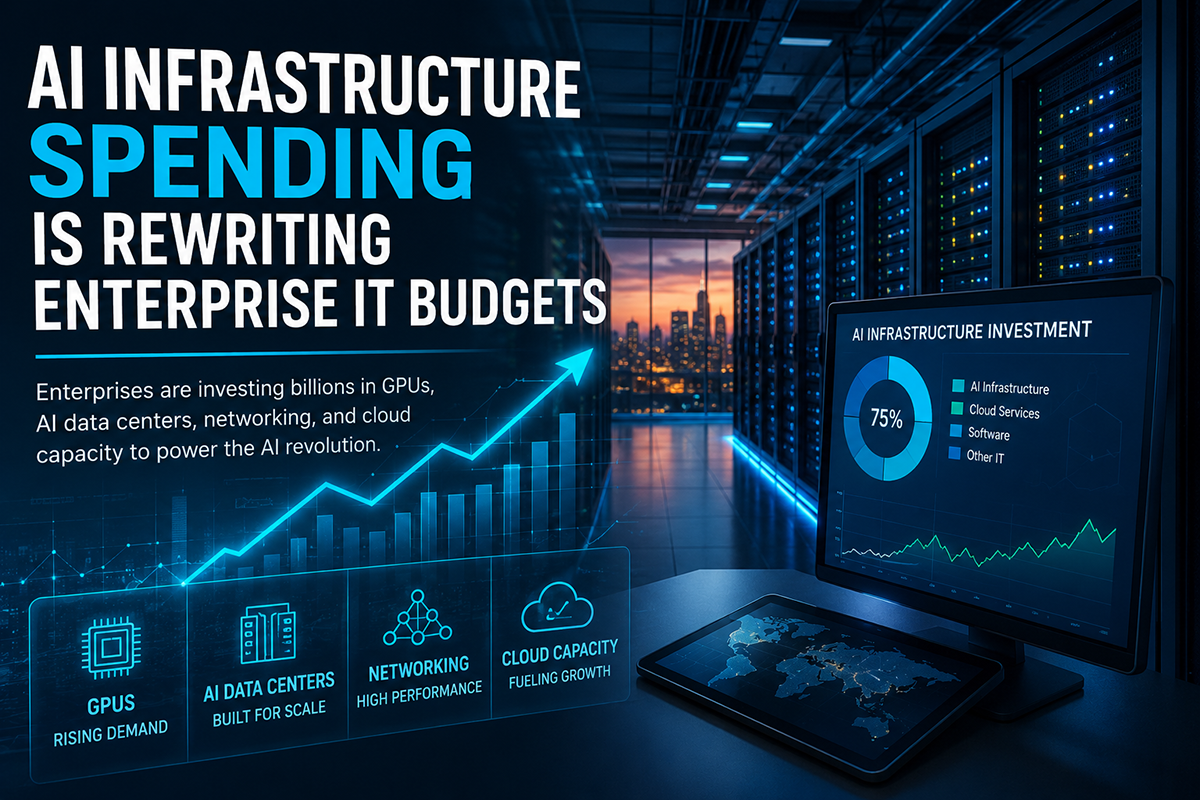
AI Infrastructure Spending Is Rewriting Enterprise IT Budgets
AI Infrastructure Spending is rapidly becoming the largest driver of enterprise technology spending worldwide. Across industries, organizations are shifting billions of dollars away from traditional IT projects and redirecting those resources toward AI infrastructure. From GPU clusters and AI-optimized data centers to advanced networking platforms and cloud-based AI services, businesses are making significant investments to ensure they can compete in an increasingly AI-driven economy.
This shift represents one of the most significant changes in enterprise technology planning in decades. For years, organizations focused their IT budgets on digital transformation initiatives, cloud migrations, cybersecurity upgrades, and software modernization. While these priorities remain important, AI infrastructure spending has emerged as a new budget category that is reshaping enterprise investment strategies worldwide.
The New Enterprise Priority
Executives are under growing pressure to demonstrate how artificial intelligence can improve productivity, automate workflows, reduce operational costs, and create competitive advantages. As a result, CIOs and technology leaders are being asked to support AI initiatives at a scale that many organizations have never experienced before.
Unlike traditional business applications, modern AI systems require significant computing power. Large language models, machine learning platforms, and generative AI applications consume enormous amounts of processing capacity, storage, and networking bandwidth. Supporting these workloads often requires entirely new infrastructure investments.
Organizations that once planned technology budgets around software licensing and cloud subscriptions are now allocating substantial resources toward AI-specific infrastructure projects. These investments frequently include GPU clusters, AI storage systems, high-speed networking equipment, and specialized cloud services designed to support machine learning workloads.
GPU Demand Continues to Surge
One of the most visible indicators of growing AI infrastructure spending is the demand for graphics processing units (GPUs). These processors have become essential for training and running advanced AI models.
Enterprise demand for GPUs has increased dramatically as organizations deploy AI applications across customer service, software development, cybersecurity, analytics, and business operations. The competition for available GPU capacity has become so intense that many enterprises face long procurement cycles and rising costs.
Technology leaders increasingly view GPU resources as strategic assets. Rather than treating compute infrastructure as a commodity, organizations are building long-term AI infrastructure strategies that ensure access to the processing power required for future AI initiatives.
This demand has also contributed to the rapid expansion of AI-focused cloud services, allowing enterprises to rent GPU capacity instead of building everything internally.
Data Centers Are Being Redesigned for AI
AI workloads are also transforming the data center industry. Traditional enterprise facilities were designed for conventional business applications, virtualization platforms, and cloud-connected services. AI introduces entirely different requirements.
High-density GPU deployments consume far more electricity than traditional server environments. They also generate significant heat, requiring advanced cooling systems and new approaches to power management.
As a result, organizations are redesigning infrastructure strategies around AI-specific requirements. New data center projects increasingly focus on power availability, cooling efficiency, network performance, and scalability.
Major cloud providers and enterprise technology vendors are investing billions of dollars in AI-ready infrastructure capable of supporting next-generation workloads. Enterprises seeking to deploy AI at scale must evaluate whether existing facilities can support future demand.
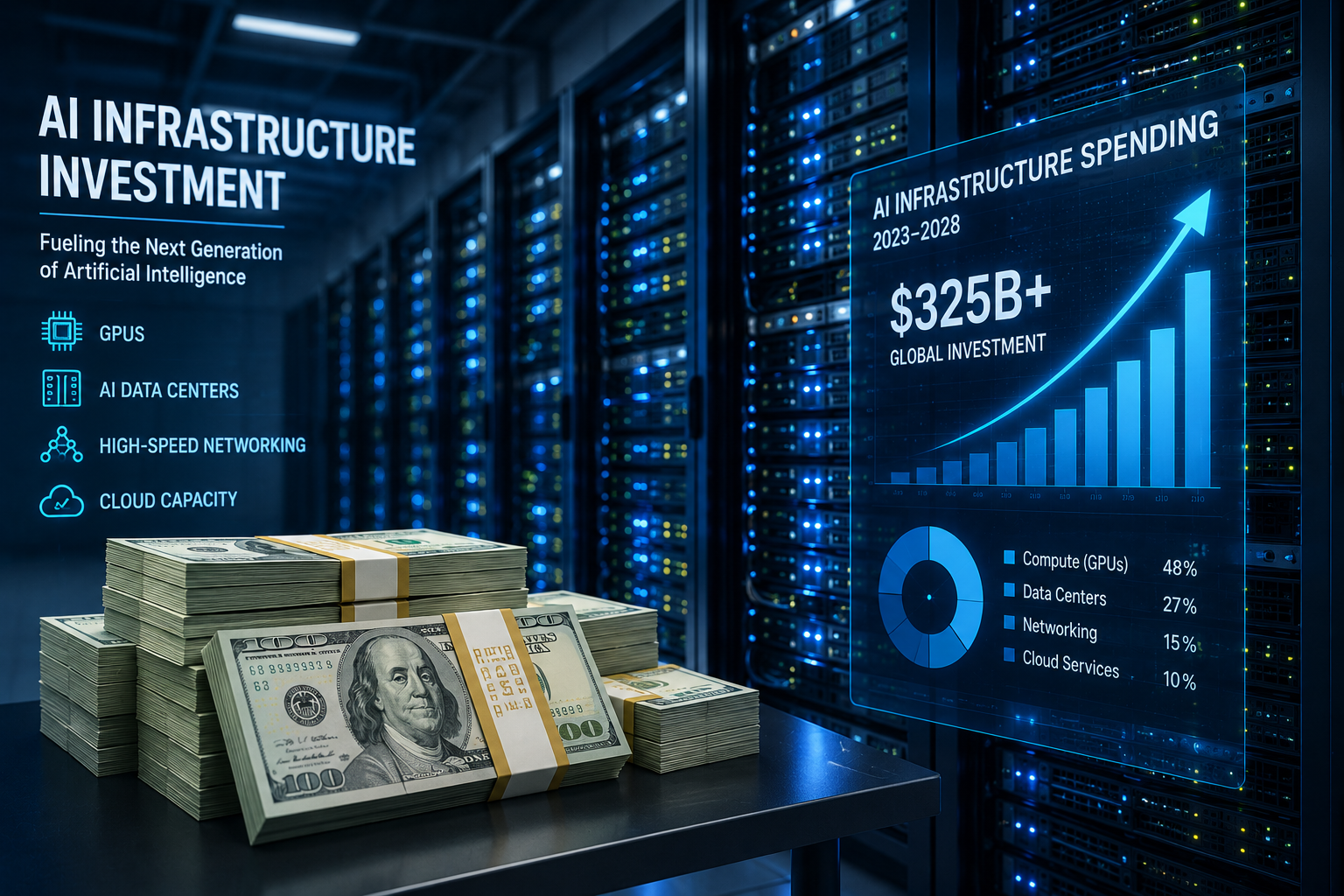
Cloud Spending Is Shifting
Cloud computing remains central to enterprise AI strategies, but spending patterns are evolving. Instead of focusing exclusively on traditional cloud migration projects, organizations are increasingly directing cloud budgets toward AI services.
Managed AI platforms, machine learning services, vector databases, AI development tools, and inference platforms have become major spending categories. Organizations often find that AI-related cloud costs can exceed expectations due to the intensive compute requirements associated with model training and deployment.
This trend is forcing enterprises to rethink cloud governance policies. Cost optimization, workload placement, and infrastructure efficiency have become critical components of AI planning.
Technology leaders must balance innovation goals against rapidly growing infrastructure expenses while ensuring that AI projects deliver measurable business value.
Networking Has Become Critical
Artificial intelligence is not just creating demand for computing power. It is also increasing the importance of networking infrastructure.
AI clusters frequently require massive amounts of data to move between systems. Storage platforms, training environments, cloud services, and inference systems all depend on high-performance networking to operate efficiently.
Organizations deploying large AI workloads are investing heavily in advanced networking technologies capable of supporting the performance requirements of modern AI applications. High-speed Ethernet, specialized AI networking architectures, and next-generation switching platforms are becoming increasingly important.
Networking is no longer viewed as a supporting technology. It has become a strategic component of AI infrastructure planning.
Budget Challenges for CIOs
The rapid growth of AI infrastructure spending presents significant challenges for enterprise leaders.
Many organizations face difficult decisions regarding resource allocation. Investments in AI infrastructure may require adjustments to existing technology roadmaps, delayed modernization projects, or reductions in other spending categories.
Technology executives must justify infrastructure expenditures while demonstrating clear business outcomes. Stakeholders increasingly expect measurable returns from AI investments, making governance and performance tracking essential.
Organizations that fail to establish clear AI strategies risk overspending on infrastructure without achieving meaningful business benefits.
The Rise of Private AI Infrastructure
While public cloud platforms remain important, many enterprises are exploring private AI infrastructure models. Security, compliance, data sovereignty, and long-term cost management are driving interest in private AI environments.
Large organizations increasingly view AI infrastructure as a strategic capability that should remain under their direct control. This has fueled investments in private AI clouds, dedicated GPU environments, and hybrid deployment models.
Private AI infrastructure allows organizations to customize environments, improve governance, and optimize workloads for specific business requirements.
As AI adoption continues to grow, hybrid strategies that combine public cloud services with private infrastructure are becoming increasingly common.
Looking Ahead
AI infrastructure spending is no longer a niche technology trend. It is becoming one of the defining forces shaping enterprise IT strategy.
Organizations across every industry are investing in the compute resources, data centers, networking platforms, and cloud services necessary to support AI-driven innovation. These investments are rewriting technology budgets, influencing infrastructure decisions, and creating new competitive dynamics across the enterprise landscape.
The enterprises that successfully balance infrastructure investments with business outcomes will be best positioned to capitalize on the opportunities created by artificial intelligence. As AI adoption accelerates, infrastructure will remain at the center of enterprise transformation efforts for years to come.
Related Articles
► AI-Native Data Centers: The Future of AI Infrastructure
► Cloud Giants vs. Regional AI Data Centers: The New Battle for Compute
► AI Data Center Infrastructure Crisis: Power, Cooling, and Scaling Limits