
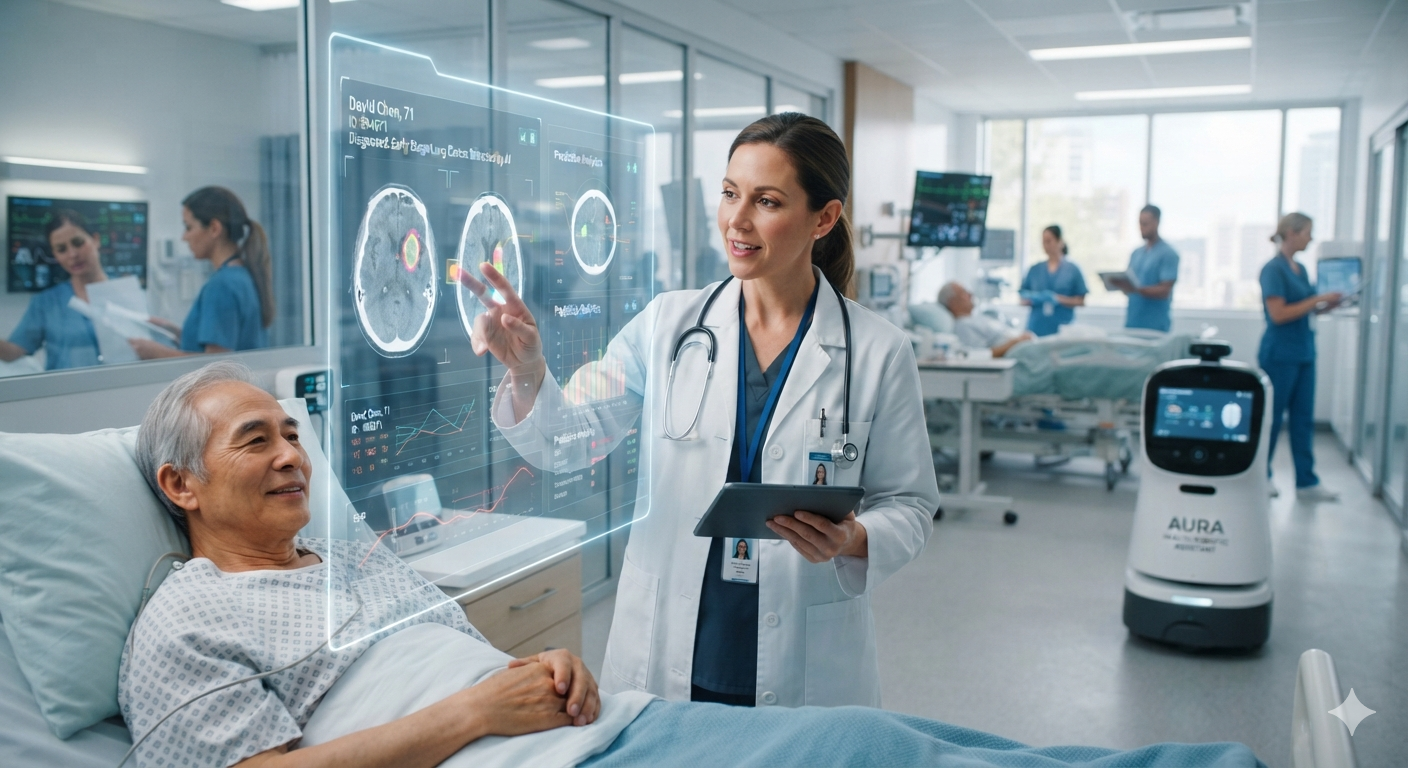
7 Ways AI in Healthcare Is Changing Lives in 2026
Artificial intelligence is no longer something reserved for technology companies or research laboratories. Today, AI in Healthcare is transforming hospitals, clinics, research facilities, and even the way patients manage their own health. From helping doctors detect diseases earlier to accelerating the development of life-saving medications, AI has become one of the most important technologies shaping modern medicine.
Healthcare systems worldwide face increasing challenges, including aging populations, physician shortages, rising costs, and growing amounts of medical data. AI offers powerful tools that help healthcare professionals make faster, more accurate decisions while improving patient outcomes.
The goal of AI is not to replace doctors or nurses. Instead, it enhances their abilities by analyzing vast amounts of information, recognizing patterns that humans may overlook, and automating repetitive tasks so healthcare professionals can spend more time caring for patients.
Here are seven remarkable ways AI in Healthcare is changing lives in 2026.
AI in Healthcare Improves Early Disease Detection
One of the greatest strengths of AI in Healthcare is its ability to detect diseases before symptoms become severe.
Modern AI systems analyze medical images, blood tests, electronic health records, and genetic information in seconds. They can identify subtle abnormalities that may indicate cancer, heart disease, diabetes, or neurological disorders much earlier than traditional methods.
Earlier detection often means:
- Better treatment options
- Lower healthcare costs
- Improved survival rates
- Less invasive procedures
Radiologists increasingly use AI as a second set of eyes, helping identify tiny tumors or fractures that might otherwise be overlooked.
Early diagnosis is saving lives every day.
AI in Healthcare Helps Doctors Make Faster Decisions
Doctors must evaluate enormous amounts of information when diagnosing patients.
Medical histories, laboratory results, imaging scans, medications, allergies, and research findings all need to be considered before making treatment decisions.
AI in Healthcare rapidly organizes and analyzes this information, presenting physicians with evidence-based recommendations that help support clinical decisions.
Instead of replacing medical expertise, AI acts like an intelligent assistant by:
- Highlighting important findings
- Identifying possible diagnoses
- Suggesting additional testing
- Comparing patient data with millions of previous cases
This allows doctors to spend more time with patients instead of searching through records.
AI in Healthcare Creates Personalized Treatment Plans
Every patient is unique.
Two people with the same illness may respond very differently to identical treatments.
One of the most exciting advances in AI in Healthcare is personalized medicine.
AI evaluates numerous factors, including:
- Age
- Lifestyle
- Medical history
- Genetics
- Previous treatments
- Family history
Using this information, healthcare providers can develop treatment plans specifically designed for each patient.
Personalized care reduces unnecessary treatments while improving recovery rates and minimizing side effects.
This individualized approach is becoming one of the biggest breakthroughs in modern medicine.
AI in Healthcare Powers Virtual Medical Assistants
Millions of patients now interact with AI before ever speaking to a doctor.
Virtual healthcare assistants can:
- Schedule appointments
- Answer medical questions
- Monitor chronic conditions
- Provide medication reminders
- Recommend when medical attention is needed
Many hospitals now use AI-powered chat systems to reduce call center workloads while providing patients with immediate assistance.
Wearable devices also contribute by continuously monitoring:
- Heart rate
- Blood pressure
- Blood oxygen
- Sleep quality
- Activity levels
When abnormal readings occur, AI can notify both patients and healthcare providers before problems become emergencies.
AI in Healthcare Improves Medical Imaging
Medical imaging continues to experience one of the fastest AI transformations.
X-rays, MRIs, CT scans, ultrasounds, and mammograms generate enormous amounts of data.
AI in Healthcare helps radiologists review these images faster while increasing diagnostic accuracy.
Benefits include:
- Faster image interpretation
- Earlier cancer detection
- Reduced diagnostic errors
- Improved emergency care
- Higher productivity for radiology departments
Rather than replacing specialists, AI provides an additional layer of confidence that supports better decision-making.
As imaging technology advances, AI will become even more valuable in detecting diseases at their earliest stages.
AI in Healthcare Accelerates Drug Discovery
Developing a new medication traditionally requires many years and billions of dollars.
Artificial intelligence is dramatically reducing both the time and cost involved.
Researchers use AI in Healthcare to analyze millions of chemical compounds, predict how drugs interact with the body, and identify promising treatment candidates much faster than traditional laboratory methods.
AI also helps researchers:
- Identify potential side effects
- Discover new uses for existing medications
- Design more efficient clinical trials
- Analyze genetic diseases
- Develop personalized therapies
These advances are speeding the development of treatments for cancer, Alzheimer’s disease, rare genetic disorders, and infectious diseases.
Medical research has entered an entirely new era thanks to artificial intelligence.
AI in Healthcare Helps Patients Stay Healthy at Home
Healthcare no longer ends when patients leave the hospital.
Remote patient monitoring has become one of the fastest-growing applications of AI in Healthcare.
Smart devices continuously collect health information and securely transmit it to healthcare providers.
AI analyzes this data in real time and alerts medical teams when concerning trends appear.
Patients managing chronic conditions such as:
- Diabetes
- Heart disease
- COPD
- Hypertension
can receive earlier interventions before complications become severe.
This reduces hospital admissions while giving patients greater independence and peace of mind.
Home healthcare supported by AI is becoming a cornerstone of modern medicine.
The Future of AI in Healthcare
The rapid evolution of AI in Healthcare is only beginning.
Over the next several years, artificial intelligence will become even more deeply integrated into nearly every aspect of healthcare delivery.
Future innovations are expected to include:
- Fully personalized treatment recommendations
- Faster emergency response systems
- Advanced robotic surgery
- AI-assisted mental health support
- Predictive disease prevention
- Smarter hospital management
- Expanded remote healthcare services
As technology continues to improve, AI will help healthcare providers deliver safer, faster, and more efficient care while allowing patients to take a more active role in managing their health.
The future of medicine will not be driven by artificial intelligence alone—it will be shaped by healthcare professionals empowered by intelligent technology.
Conclusion
There is no question that AI in Healthcare is transforming medicine in remarkable ways. From detecting diseases earlier and improving medical imaging to accelerating drug discovery and supporting personalized treatment plans, artificial intelligence is helping healthcare providers deliver better care while improving patient outcomes.
As healthcare systems continue to evolve, AI will become an even more valuable partner for doctors, nurses, researchers, and patients alike. While human compassion and clinical expertise remain irreplaceable, intelligent technology is making healthcare more accurate, efficient, and accessible than ever before.
The future of medicine has already begun—and AI in Healthcare is leading the way.
Related Articles
- The Hidden Cost of Free AI Tools: What Every Business Should Know
- How AI Is Changing Online Shopping Forever
- Why Millions Are Switching to AI Instead of Google in 2026