Artificial intelligence is transforming nearly every sector of the technology industry, and cybersecurity is quickly becoming one of the most affected. For decades, cybersecurity strategies relied on signature-based detection systems, rule-driven firewalls, and manual monitoring performed by security analysts. While these approaches remain important, the scale and speed of modern cyber threats have grown far beyond what traditional security tools can handle alone.
Today, organizations face a new challenge: cybercriminals are beginning to use artificial intelligence to power their attacks. Machine learning systems can automate reconnaissance, generate highly convincing phishing campaigns, and identify vulnerabilities faster than ever before.
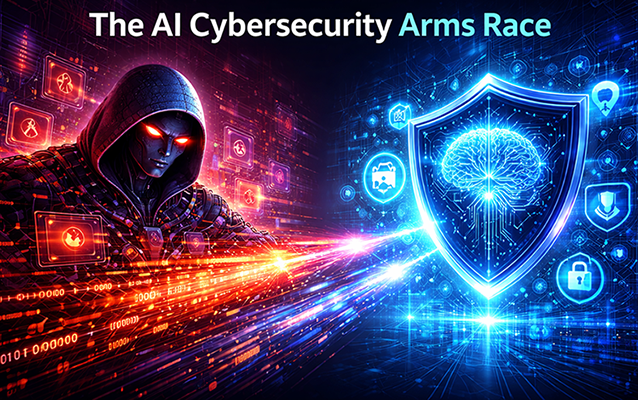
In response, cybersecurity teams are deploying AI-driven security platforms capable of analyzing enormous volumes of data and detecting suspicious patterns in real time. This dynamic has created what many security professionals describe as an AI cybersecurity arms race, where intelligent threats are met with increasingly intelligent defenses.
Understanding how this conflict is evolving is essential for organizations seeking to protect their digital infrastructure.
The Expanding Cyber Threat Landscape
The modern threat environment is dramatically different from what organizations faced even a decade ago. Cybercriminal groups now operate as highly organized businesses capable of launching coordinated attacks against governments, corporations, and critical infrastructure.
Attackers use a wide range of techniques, including:
-
ransomware attacks targeting corporate networks
-
credential theft through phishing and social engineering
-
exploitation of cloud infrastructure vulnerabilities
-
supply chain attacks targeting software providers
-
data exfiltration campaigns aimed at intellectual property
At the same time, enterprise infrastructure has become more complex. Organizations operate across hybrid environments that include cloud platforms, containers, microservices, remote work devices, and third-party SaaS systems.
This complexity generates massive amounts of data and creates numerous potential attack surfaces. Monitoring such environments manually is nearly impossible, which is why AI is becoming an essential component of modern cybersecurity.
How Attackers Are Leveraging Artificial Intelligence
Cybercriminals are increasingly using artificial intelligence to improve the effectiveness and scalability of their attacks. AI technologies allow attackers to automate tasks that once required significant time and expertise.
One of the most common uses of AI in cybercrime is phishing automation. Generative AI tools can create highly convincing messages that mimic legitimate communications from companies, colleagues, or service providers. These messages can be personalized using publicly available information from social media platforms or data breaches.
Because AI can generate large volumes of realistic messages quickly, attackers can launch massive phishing campaigns targeting thousands of victims simultaneously.
AI is also being used to automate vulnerability discovery. Machine learning systems can analyze software codebases, network configurations, and system logs to identify weaknesses that attackers may exploit. This significantly accelerates the process of finding security flaws in complex applications.
In addition, AI is beginning to influence malware development. Some advanced malware variants can adapt their behavior dynamically to avoid detection by traditional antivirus tools.
AI-Powered Social Engineering
Social engineering attacks remain one of the most successful tactics used by cybercriminals. Artificial intelligence is making these attacks even more dangerous.
AI systems can analyze writing styles, communication patterns, and corporate language to create emails that closely resemble legitimate business communications. In some cases, attackers are using AI-generated voice technology to impersonate executives during phone calls.
These techniques make it increasingly difficult for employees to distinguish between legitimate communications and malicious attempts to steal credentials or financial information.
As generative AI technology continues to advance, social engineering attacks will likely become even more sophisticated.
Defenders Turn to AI for Protection
While attackers are experimenting with AI-powered techniques, cybersecurity teams are also adopting artificial intelligence to strengthen their defenses.
AI cybersecurity platforms can analyze enormous datasets collected from networks, endpoints, cloud environments, and application systems. Machine learning algorithms process this information to identify patterns associated with malicious activity.
Unlike traditional security systems that rely on predefined signatures, AI platforms continuously learn from new data and adapt their detection models over time.
This allows security systems to identify previously unknown threats and detect subtle indicators of compromise that might otherwise go unnoticed.
Behavioral Threat Detection
One of the most powerful capabilities of AI security platforms is behavioral analysis.
Instead of focusing only on known malware signatures, machine learning systems analyze how systems and users normally behave within an organization. When activity deviates from this baseline, the system flags it as suspicious.
For example, an AI security system might detect:
-
login attempts from unusual geographic locations
-
abnormal data transfer volumes
-
unexpected application behavior
-
unusual communication between internal services
By identifying these anomalies early, organizations can detect attacks before significant damage occurs.
Behavioral analysis is particularly valuable for detecting insider threats and previously unknown attack techniques.
Automating Incident Response
Speed is critical in cybersecurity. The faster an organization can detect and respond to a threat, the less damage an attacker can cause.
Artificial intelligence allows security platforms to automate portions of the incident response process.
When suspicious activity is detected, AI-driven systems can automatically perform actions such as:
-
isolating compromised devices from the network
-
blocking malicious IP addresses
-
disabling compromised user accounts
-
initiating automated investigations
These automated responses help security teams contain threats quickly while analysts investigate the incident further.
Reducing Security Alert Fatigue
Security teams often struggle with alert fatigue. Modern IT environments generate enormous numbers of security alerts, many of which are false positives.
AI helps address this challenge by prioritizing alerts based on risk level and likelihood of malicious activity.
Machine learning systems can filter large volumes of security events and highlight only the most critical threats for human analysts to investigate.
This significantly improves the efficiency of security operations centers and allows analysts to focus on the most important incidents.
The Role of Human Expertise
Despite the growing capabilities of artificial intelligence, cybersecurity still depends heavily on human expertise.
AI systems are excellent at analyzing patterns and processing large datasets, but they cannot fully replace experienced security professionals.
Human analysts remain essential for:
-
interpreting complex security incidents
-
understanding attacker motivations
-
developing long-term security strategies
-
making critical response decisions
The most effective cybersecurity programs combine AI-driven detection systems with skilled human analysts.
This partnership between humans and intelligent technology allows organizations to respond to threats more effectively.
Preparing for the Future of AI Cybersecurity
Artificial intelligence will continue to shape the future of cybersecurity. Both attackers and defenders will continue experimenting with AI-driven tools to gain an advantage.
In the coming years, AI cybersecurity platforms may include capabilities such as:
-
predictive threat intelligence
-
automated vulnerability remediation
-
self-healing infrastructure defenses
-
real-time security orchestration
Organizations that invest in modern security technologies and advanced threat detection systems will be better prepared to defend against increasingly sophisticated cyber threats.
The AI cybersecurity arms race is just beginning, and the organizations that adapt fastest will be the ones most capable of protecting their digital environments.