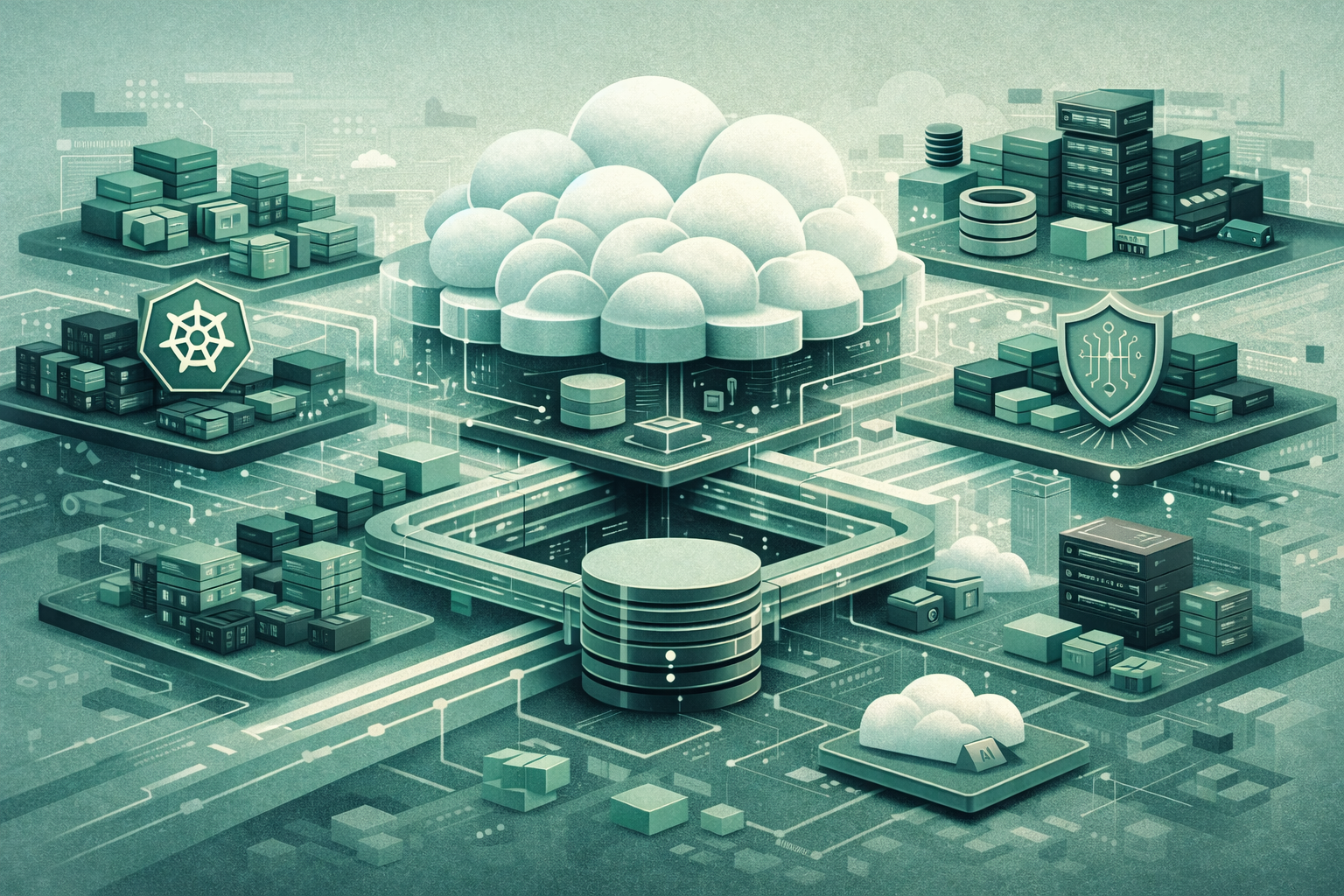
Cloud computing was supposed to simplify infrastructure. Abstract the hardware, outsource the undifferentiated heavy lifting, and allow teams to focus on building products.
For a time, it worked.
But in 2026, many organizations are coming to the same conclusion: cloud architectures are getting more complex, not simpler.
This complexity is not accidental. It is the result of layered decisions made over years—each reasonable in isolation, but collectively difficult to manage.
The Myth of Cloud Simplicity
Early cloud adoption replaced physical servers with virtual machines. The mental model was familiar, and the operational gains were immediate.
Since then, the cloud has evolved rapidly. Managed services, containers, orchestration platforms, serverless functions, and AI infrastructure have all promised greater efficiency and abstraction.
Instead, teams now manage:
-
Multiple compute models
-
Dozens of managed services
-
Distributed identity and access policies
-
Hybrid and multi-cloud environments
The infrastructure may be abstracted—but the architecture is anything but simple.
Managed Services Multiply, Ownership Shrinks
Managed services are designed to reduce operational burden. In practice, they often introduce new dependencies and failure modes.
Each managed database, messaging service, or AI platform has:
-
Its own configuration model
-
Its own scaling behavior
-
Its own security boundaries
-
Its own cost profile
Teams consume these services quickly, but rarely standardize how they are used. Over time, architectural consistency erodes.
When incidents occur, ownership becomes unclear. Is the problem with the application, the platform team, or the provider?
Hybrid and Multi-Cloud Are Now the Default
Few organizations operate entirely within a single cloud. Regulatory requirements, data locality, latency concerns, and vendor risk all push teams toward hybrid and multi-cloud architectures.
This introduces unavoidable complexity:
-
Networking across environments
-
Identity federation
-
Data synchronization
-
Operational tooling fragmentation
Even with abstraction layers, teams must understand the underlying differences. Cloud neutrality sounds simple in theory, but it demands deep expertise in practice.
Kubernetes Didn’t Simplify Everything
Containers and Kubernetes promised portability and standardization. They delivered—but at a cost.
Kubernetes environments often require:
-
Custom networking models
-
Service meshes
-
Policy engines
-
Observability stacks
-
Platform-specific extensions
What was once managed at the infrastructure level now lives inside platform layers maintained by internal teams.
For many organizations, the platform team has quietly become a cloud provider within the cloud.
Security and Governance Add Necessary Friction
As architectures grow more distributed, security requirements increase.
Cloud environments now involve:
-
Multiple identity systems
-
Fine-grained access controls
-
Encryption across services
-
Compliance monitoring
These controls are essential—but they also introduce friction. Policies must be enforced consistently across environments that were never designed to operate together.
Security does not create complexity on its own. It exposes the complexity that already exists.
AI Infrastructure Accelerates the Trend
AI workloads have intensified architectural sprawl.
Organizations now add:
-
GPU-enabled compute pools
-
Specialized storage layers
-
Model pipelines
-
Inference services
-
Data governance controls
AI systems often bypass traditional application architectures, creating parallel stacks that must still integrate with existing platforms.
The result is not replacement—but accumulation.
Why Abstraction Has Limits
Abstraction is valuable, but it cannot eliminate complexity—it only moves it.
As organizations stack abstractions on top of abstractions, troubleshooting becomes harder. Visibility decreases. Mental models fracture.
At some point, teams must understand what lies beneath the abstraction—or risk losing control entirely.
What Effective Teams Are Doing Instead
High-performing organizations are not chasing simplicity. They are managing complexity deliberately.
They:
-
Standardize architectural patterns
-
Limit service sprawl
-
Define clear ownership models
-
Invest in platform governance
-
Treat architecture as a product
Rather than hiding complexity, they make it visible, understandable, and intentional.
Complexity Is the New Normal
Cloud computing did not fail. It succeeded beyond expectations.
But success brought scale, diversity, and new demands. The challenge for modern teams is not to eliminate complexity—but to design systems that can sustain it.
In 2026, cloud maturity is no longer about how little infrastructure you manage.
It’s about how well you understand the architecture you’ve built.