
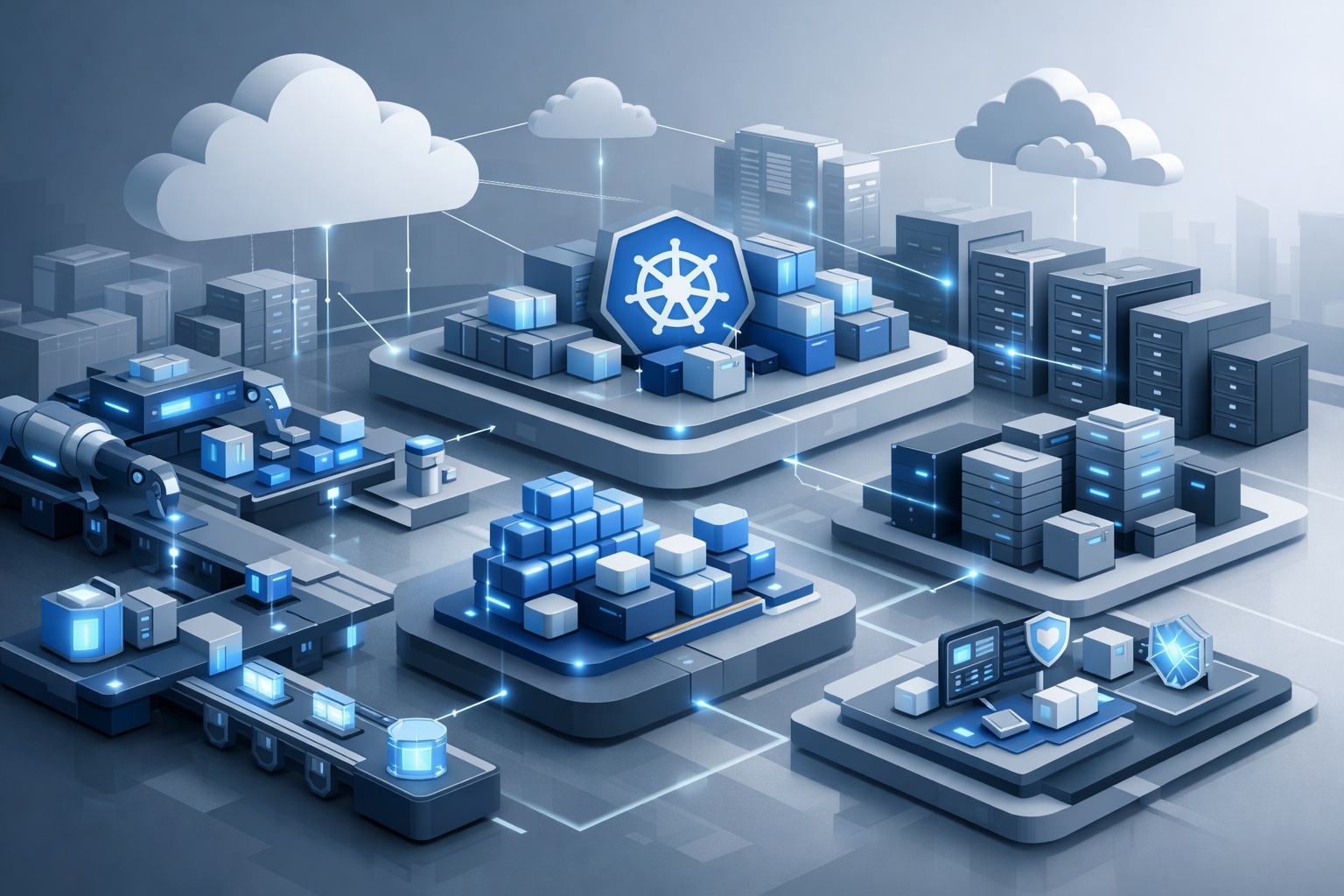
For years, “cloud-native” was treated as a future-state goal — something innovative teams experimented with while legacy environments carried the business. That era is over. In 2026, cloud-native architecture is no longer a competitive advantage. It’s a baseline requirement for survival.
Enterprises that still rely heavily on monolithic applications, rigid infrastructure, and manual deployment processes are discovering an uncomfortable truth: traditional IT models simply can’t keep pace with today’s demands for speed, resilience, and security.
Cloud-native isn’t about chasing trends. It’s about aligning technology with how modern businesses actually operate.
What Cloud-Native Really Means Today
Cloud-native is often misunderstood as “running workloads in the cloud.” In reality, it’s a complete shift in how applications are built, deployed, and operated.
At its core, a cloud-native strategy emphasizes:
-
Containerized applications
-
Microservices-based architectures
-
Automated CI/CD pipelines
-
Declarative infrastructure
-
Platform-level abstractions that reduce operational friction
This approach allows teams to ship faster, recover quicker, and scale with precision — all while reducing dependency on fragile, manually managed systems.
The Breaking Point for Legacy Infrastructure
Traditional environments were designed for predictability, not change. Unfortunately, change is now constant.
Legacy stacks struggle with:
-
Long release cycles
-
High failure blast radius
-
Manual security controls
-
Scaling that requires human intervention
-
Tight coupling between infrastructure and applications
As digital services become mission-critical, these limitations turn into real business risks. Downtime isn’t just an IT issue anymore — it directly impacts revenue, customer trust, and brand reputation.
Cloud-native platforms are designed for failure tolerance and rapid recovery, not perfection. That mindset shift alone is transformative.
Security Is Driving Cloud-Native Adoption
One of the biggest misconceptions is that cloud-native environments are less secure. In practice, the opposite is true — when implemented correctly.
Modern security strategies rely on:
-
Immutable infrastructure
-
Automated policy enforcement
-
Continuous vulnerability scanning
-
Identity-driven access controls
-
Runtime visibility across workloads
Cloud-native architectures make security programmable. Instead of relying on perimeter defenses, security becomes embedded directly into pipelines, platforms, and workloads.
This is especially critical as organizations adopt AI-driven services, APIs, and distributed systems that expand the attack surface far beyond traditional networks.
Platform Engineering Is the Missing Link
Many early cloud-native initiatives failed because they placed too much burden on developers. Managing Kubernetes, pipelines, secrets, observability, and security tooling independently doesn’t scale.
That’s where platform engineering comes in.
Internal developer platforms abstract complexity away from application teams while still enforcing organizational standards. The result is a self-service experience that accelerates delivery without sacrificing governance.
Cloud-native succeeds when developers are empowered — not overwhelmed.
Cloud-Native and Cost Control Go Hand in Hand
Cost concerns often delay modernization efforts. Ironically, legacy environments are frequently more expensive over time.
Cloud-native platforms enable:
-
Fine-grained scaling instead of overprovisioning
-
Better resource utilization
-
Faster experimentation with lower risk
-
Clear visibility into usage and spend
When teams can deploy only what they need — and shut it down just as quickly — efficiency becomes the default rather than an afterthought.
Hybrid and Multi-Cloud Are Now the Norm
Very few enterprises operate in a single environment. Hybrid and multi-cloud strategies are now standard, driven by regulatory requirements, data sovereignty, and performance needs.
Cloud-native architectures are inherently portable. Workloads designed for containers and declarative infrastructure move far more easily across environments without major rewrites.
That flexibility is becoming a strategic necessity as organizations navigate geopolitical risk, compliance mandates, and evolving customer expectations.
The Cloud-Native Gap Is Getting Wider
Perhaps the most important reality is this: the gap between cloud-native organizations and everyone else is widening fast.
Teams that modernized early are:
-
Shipping features weekly — or daily
-
Recovering from incidents in minutes
-
Automating compliance instead of auditing manually
-
Integrating AI services faster than competitors
Those still waiting are accumulating technical debt that compounds over time. The longer modernization is delayed, the harder — and riskier — it becomes.
Final Thoughts
Cloud-native isn’t about technology for technology’s sake. It’s about building systems that reflect how modern businesses operate: fast, distributed, and constantly evolving.
The question is no longer if organizations should adopt cloud-native practices — it’s how quickly they can do it without disrupting the business.
In 2026, cloud-native isn’t optional anymore. It’s the foundation everything else is built on.