AI software development is no longer a future concept—it is happening right now, and companies like Meta are pushing it forward faster than most organizations can keep up.
What used to take entire engineering teams weeks or months to build can now be partially generated, tested, and optimized by artificial intelligence in a fraction of the time. This shift is not just about productivity. It represents a fundamental change in how software is created, deployed, and maintained.
For DevOps teams, this transformation is even more significant than it is for developers.
🔥 The Rise of AI Software Development
AI software development has evolved rapidly over the past few years. Initially, tools focused on assisting developers with simple tasks like code completion or debugging. Today, those same systems are capable of generating entire workflows, suggesting architectures, and even handling deployment logic.
Meta’s investment in AI is not incremental—it is aggressive and strategic. The company is building infrastructure, training large-scale models, and integrating AI deeply into its internal development processes.
The goal is clear:
👉 Move from AI-assisted coding to AI-driven software creation
This shift allows organizations to dramatically increase output while reducing manual effort. However, it also introduces complexity that many teams are not prepared for.
⚡ From Code Assistants to Autonomous Systems
Traditional development workflows rely heavily on human input at every stage:
- Planning
- Coding
- Testing
- Deployment
AI software development disrupts this model by introducing systems that can perform multiple stages autonomously.
Instead of writing code line-by-line, developers now:
- Define intent
- Provide context
- Validate outputs
AI systems handle:
- Code generation
- Refactoring
- Initial testing
- Optimization suggestions
This changes the role of engineers from builders to orchestrators of intelligent systems.

🧠 Meta’s Strategy: Scaling AI Across Development
Meta is not treating AI as a tool—it is treating it as infrastructure.
The company is investing heavily in:
- Custom AI hardware
- Large language models
- Automated development workflows
This allows Meta to:
- Build faster
- Experiment more frequently
- Reduce reliance on large engineering teams
More importantly, Meta is aligning AI with its core development lifecycle, meaning AI software development is becoming the default—not the exception.
💥 What This Means for DevOps Teams
If AI is writing more of the code, DevOps becomes even more critical—not less.
1. Pipeline Complexity Increases
AI-generated code introduces variability.
Each output may:
- Follow different patterns
- Introduce unexpected dependencies
- Require validation before deployment
DevOps teams must ensure pipelines can handle this variability without breaking.
2. Security Risks Multiply
AI software development introduces new attack surfaces:
- Vulnerabilities hidden in generated code
- Misconfigured infrastructure
- Lack of context-aware security controls
DevSecOps practices become essential, not optional.
3. Monitoring Becomes More Important
When humans write code, they understand intent.
When AI generates code:
- Intent may be unclear
- Behavior may be unpredictable
This makes observability critical.
🚀 The New DevOps Skill Set
To succeed in the era of AI software development, DevOps engineers must adapt.
Key skills include:
- Kubernetes and container orchestration
- Infrastructure as Code (Terraform)
- CI/CD pipeline automation
- AI-assisted development workflows
- Security automation
👉 Engineers who combine AI awareness + DevOps expertise will dominate the job market.
⚠️ The Hidden Risks of AI-Generated Software
While AI software development offers massive advantages, it also comes with serious challenges.
🔴 Lack of Accountability
Who is responsible when AI-generated code fails?
🔴 Inconsistent Quality
AI outputs can vary widely depending on input quality.
🔴 Over-Reliance on Automation
Teams may lose deep technical understanding over time.
🔴 Compliance Challenges
AI-generated code may not meet regulatory requirements.
💰 The Business Impact of AI Software Development
Companies adopting AI software development are seeing:
- Faster release cycles
- Reduced development costs
- Increased experimentation
- Higher innovation velocity
However, these benefits only materialize when DevOps practices are strong enough to support them.
Without proper infrastructure, AI can create chaos instead of efficiency.
🔥 Why This Matters Right Now
This is not a future trend—it is a current reality.
Organizations are already:
- Hiring AI-focused DevOps engineers
- Rebuilding pipelines around automation
- Integrating AI into production environments
Ignoring AI software development is no longer an option.
🧠 Final Thoughts
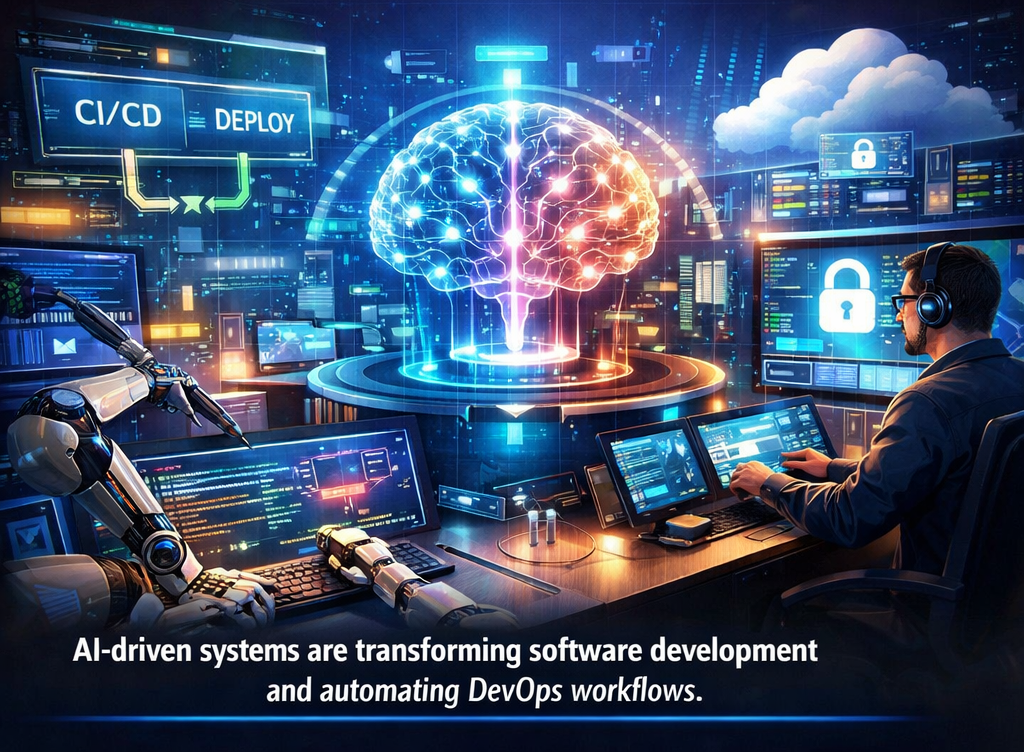
AI software development is transforming how software is built, deployed, and maintained.
Meta’s aggressive push into this space signals a broader industry shift—one where AI becomes a core part of engineering, not just a supporting tool.
For DevOps professionals, this is both a challenge and an opportunity.
Those who adapt will find themselves at the center of the next generation of software development.
Those who don’t risk being left behind.